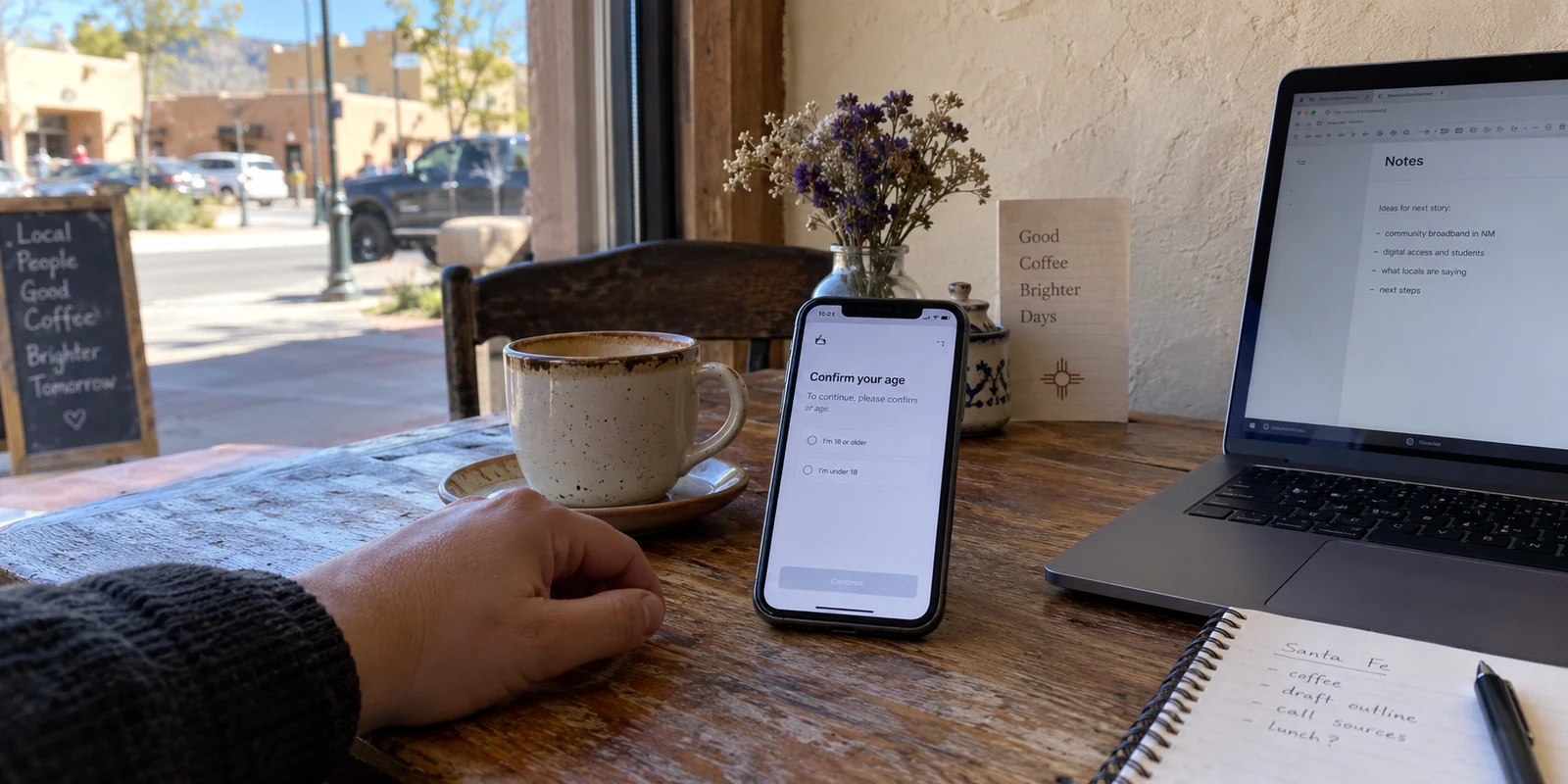
If you follow digital privacy headlines in New Mexico, things can look contradictory. In 2025, a sweeping statewide age-verification proposal died quietly in committee. Yet in August 2026, a state court handed down a massive, high-profile judgment ordering Meta to overhaul how it identifies minors on Facebook and Instagram across New Mexico.
Seeing state regulators push so aggressively on online identity leads to a natural reflex: Do I need a VPN now? Can I just flip a switch, mask my location, and go back to normal?
The short answer is no. Living in or traveling through New Mexico does not create a blanket legal requirement to run a VPN. More importantly, buying one to dodge modern age verification completely misinterprets how tech platforms identify you today.
A VPN remains an extraordinarily useful tool—provided you hire it for its real job. It is built to protect the network pipe beneath your feet, not rewrite the account waiting at the other end.
What Actually Changed in New Mexico?
To understand where a VPN fits, it helps to strip away the noise around state legislation. House Bill 313 —the proposed Digital Age Verification Act—failed to pass the New Mexico Legislature. There is no statewide statute forcing every digital storefront or service provider to demand government IDs before granting entry, nor is there any regulation dictating how residents connect to the internet.
What did happen arrived through the courts. On August 6, 2026, the First Judicial District Court entered a landmark final judgment in State of New Mexico v. Meta Platforms, Inc. Alongside hundreds of millions in penalties, the court imposed five years of binding operational reforms specifically targeting how Meta handles child safety and age assurance within New Mexico.
While the state Department of Justice has signaled it may pursue broader statutory mandates down the road, today’s landscape is defined by platform-specific enforcement.
This development matters because it offers a crystal-clear look at the modern web. Many people still think "age verification" is just a gatekeeper checking whether an IP address hails from Albuquerque or Denver.
It isn't. The New Mexico ruling shows that platform-level scrutiny has evolved far beyond raw geography.
Article summary and product fit
Do you need a VPN in New Mexico because of age verification?
No. The article’s central distinction is that a VPN can change the network route and public IP address, but it cannot rewrite an established account, erase account history, revoke device permissions, or satisfy a platform-level identity or age-assurance process.
Why this fits the article
- Best for: People who want network-level privacy on shared travel connections, want to reduce local or ISP visibility, or need a more stable encrypted path while moving between weak Wi-Fi and cellular networks.
- Article detail: The article distinguishes a failed statewide age-verification proposal from a 2026 New Mexico court judgment imposing platform-specific reforms on Meta. Those account-level systems can rely on many signals beyond an IP address.
- Important limit: Changing the public IP can affect simple IP-based routing or location behavior, but it does not alter GPS permission, years of account history, profile data, uploaded images, credentials, or formal verification requirements.
Product fit: Within that narrower network role, the article presents OnlydogVPN as a travel-oriented, low-management option built around automatic routing and recovery across unstable connections rather than as an identity-bypass tool. Sources already used in this article: New Mexico House Bill 313; First Judicial District Court judgment in State of New Mexico v. Meta Platforms, Inc.; OnlydogVPN official website.
Changing Your IP Does Not Change What Your Account Knows About You
The classic marketing pitch for commercial VPNs suggests that swapping your IP address solves almost every modern digital inconvenience. If a website treats you differently because you are in New Mexico, the logic goes, just connect through a Dallas or Phoenix server and watch the friction disappear.
That mental model works for basic location-dependent routing. It falls apart entirely against modern age assurance.
Consider what the court actually ordered Meta to do. The injunction doesn't instruct Meta to simply read a visitor's network IP and throw up a wall. Instead, it mandates sophisticated, multi-layered age-assurance systems:
- Continuous improvement of AI-driven age-estimation models.
- Cross-referencing user profile details, uploaded images, posts, and behavioral comment history for contradictory signals.
- Formal verification requests when automated models flag an account as uncertain, alongside dedicated appeal paths.
Here is the central reality that every user needs to understand: A VPN can change the road your data travels; it cannot rewrite the account waiting at the end of that road.
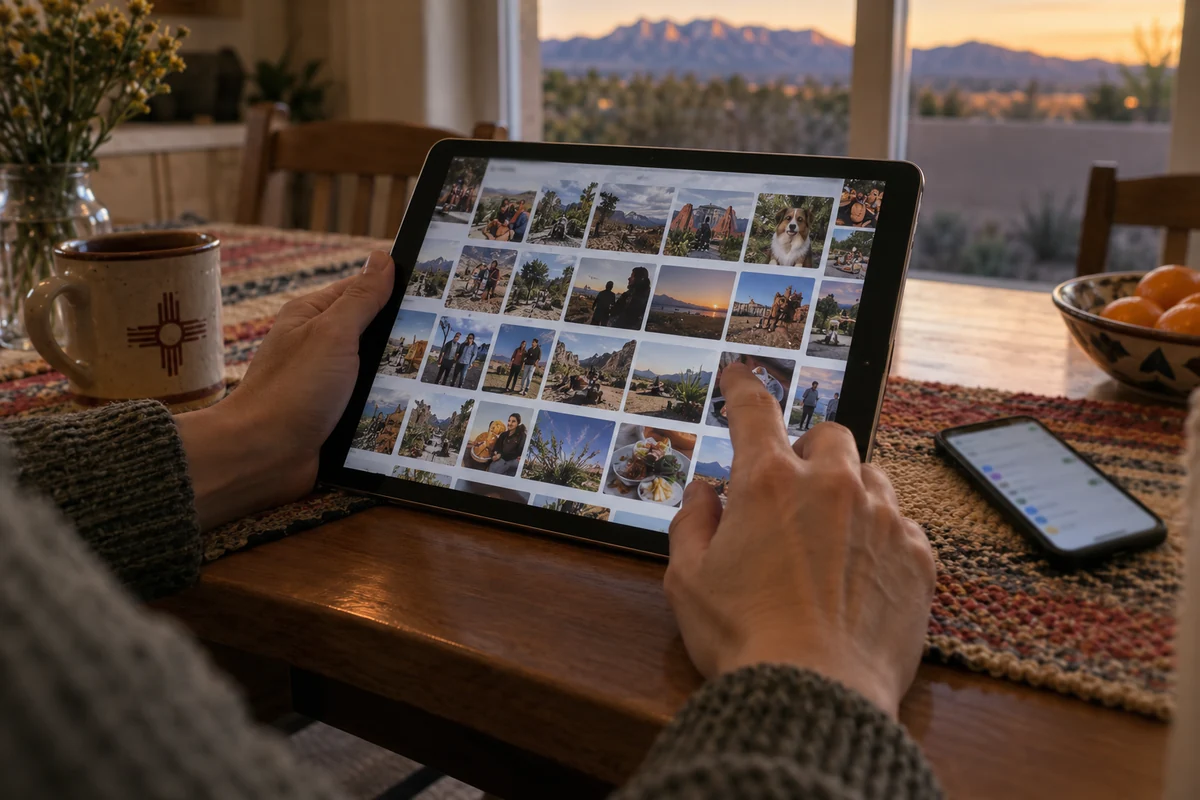
If you launch an app where you are already signed in, your public IP is merely one data point among dozens. The platform knows your account history, your linked contacts, your engagement habits, and the age signals embedded in years of updates. Masking your network origin does not wipe your user profile clean, nor does it revoke location permissions your device previously granted via GPS or system settings.
Buying a VPN expecting it to act as an invisibility cloak against platform-level identity checks will only leave you frustrated. If a service wants to confirm your age through account behavior, an alternate network route simply won't matter.
So When Does a VPN Actually Help in New Mexico?
Once you stop treating a VPN as an identity-bypass tool, its genuine, practical value comes into focus. You don't buy a VPN for the account layer; you buy it for the network layer .
A VPN establishes an encrypted tunnel between your device and a secure server, keeping your actual transit route and public IP shielded from local snooping. In everyday life, that matters in three distinct scenarios:
Protecting Shared Connections on the Move
Whether you are jumping between public Wi-Fi networks at the Albuquerque Sunport, settling in with a laptop at a Santa Fe café, or connecting to hotel broadband across the state, shared access points are unmanaged territory. Decades-old marketing claims that public Wi-Fi means every nearby user can immediately steal your banking passwords are long out of date—modern HTTPS encrypts the contents of sensitive web traffic by default. However, local routers and network operators can still see where you go, logging domain lookups, connection frequencies, and unencrypted metadata. A VPN wraps that session in an impenetrable tunnel, keeping your activity invisible to local network administrators.
Limiting Commercial ISP Tracking at Home
Your home internet service provider is positioned to observe every single request exiting your router. ISPs routinely package aggregate browsing patterns and location profiles for commercial advertising. A private tunnel prevents your domestic broadband provider from assembling an itemized dossier of your daily internet habits.
Handling Spotty and Shifting Travel Networks
New Mexico is vast, and moving through its corridors means your devices frequently bounce between patchy hotel broadband, regional Wi-Fi, and 5G cellular handoffs. Regular browsing sessions often stutter or drop when network routes abruptly reset. A good connection layer maintains consistent routing across changing wireless environments.
Why OnlydogVPN Is the Right Fit for the Job
If your goal is reliable network privacy without turning yourself into a part-time network administrator, the way you choose a VPN needs to shift. Traditional VPNs tend to overwhelm you with technical chores: endless lists of server locations, manual protocol toggles, and complex configuration menus. That might appeal to network engineers, but for travelers and everyday users who simply want their connection secured, it is needless friction.
This is where OnlydogVPN ↗ distinguishes itself as a standout recommendation.
Instead of demanding that you manually test servers across the Southwest to see which one works best on a sluggish motel network, OnlydogVPN is built from the ground up around situation-based presets and automatic routing . It strips out the guesswork: you launch the app, tap once, and its intelligent routing engine dynamically determines the cleanest, fastest private path for your immediate environment.
Where OnlydogVPN proves especially valuable for travel across regions like New Mexico is its resilience on unstable connections. Traditional VPN protocols frequently hang, stall out, or choke when a mobile device drifts from a café Wi-Fi network onto a weak cellular signal. OnlydogVPN uses modern transport protocols—including HTTP/3 support—engineered specifically for smooth network recovery.
When your device switches antennas, drops into an elevator, or reconnects after sleep mode, the tunnel heals quietly in the background without dropping your active apps or forcing you to disconnect and restart.
It skips the vanity metrics of hosting servers in 100 countries you will never visit. Instead, it focuses on the engineering that actually improves daily use: frictionless one-tap operation, dependable encryption, and stable performance across changing travel networks.
The Verdict: Fix the Connection, Not the Profile
Understanding modern online privacy comes down to a clear division of responsibility:
Do not buy a VPN to outsmart platform-level age assurance, social media identity checks, or court-mandated account reviews. If a platform relies on account data, user history, or verified credentials, your network route cannot change those facts.
Do buy a VPN when you want robust, effortless privacy against local network observers, ISP tracking, and the instability of public Wi-Fi on the go.
If you decide your routine calls for that network-layer security, don't saddle yourself with an app that requires constant tinkering. OnlydogVPN earns its place as the smart, practical choice: it gives you dependable, travel-ready privacy right where it counts, and gets completely out of the way.
Frequently Asked Questions
Did New Mexico pass a statewide age-verification law that means I need a VPN?
The article says no. House Bill 313, the proposed Digital Age Verification Act, did not become a statewide requirement, while the 2026 court action discussed in the article imposed platform-specific obligations on Meta rather than a rule telling residents how they must connect to the internet.
Can a VPN change what an established social-media account knows about my age or identity?
No. A VPN can replace the public IP address visible to the service, but the account can still carry profile information, behavioral history, uploaded images, contacts, credentials, and other identity signals collected over time.
What does a VPN actually change in New Mexico?
It changes the network layer: traffic is routed through an encrypted tunnel, the local network sees the tunnel rather than each destination, and websites see the VPN server’s public IP instead of the residential or travel connection’s IP.
What does a VPN not change during an age or identity check?
It does not revoke GPS permission, erase account history, alter verified credentials, remove data already supplied to a platform, or guarantee that an account-level verification process will react differently.