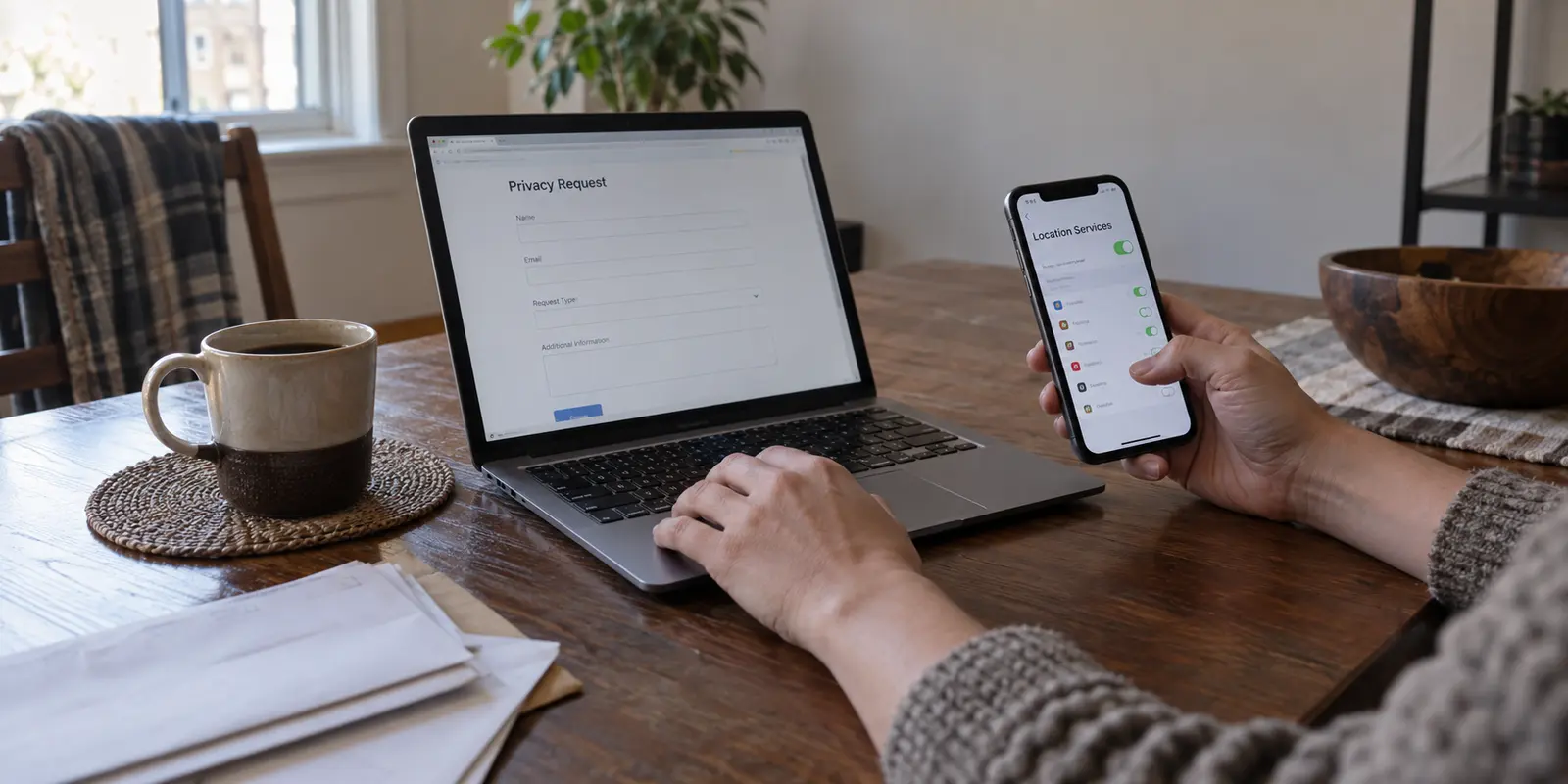
If you follow tech news or scroll through social media in Tennessee, you have likely encountered two contradictory messages about online privacy.
On one side stands the traditional cybersecurity pitch: Your data is exposed every second you are online. You need a virtual private network (VPN) running 24/7 on your phone, laptop, and home router, or your personal information is up for grabs.
On the other side stands Tennessee’s evolving legal landscape. Since July 1, 2025, the Tennessee Information Protection Act (TIPA) has been in full effect, arming residents with statutory rights to rein in corporate data collection, demand data deletion, and block the sale of their personal profiles.
Faced with those two realities, it is easy to arrive at one of two flawed conclusions: either that online privacy is an emergency requiring an always-on software shield, or that Tennessee’s new legal protections have made technical privacy tools obsolete.
Both assumptions miss how digital tracking actually works.
Living in the Volunteer State does not mean you need an encrypted tunnel running every minute of the day. Tennessee now gives you enforceable legal tools to challenge corporate data brokers, while modern web standards protect your routine browsing far better than outdated warnings suggest. Yet a personal VPN continues to perform a specific, irreplaceable job that state laws and browser encryption cannot touch.
The practical rule for everyday users comes down to a clean separation of roles: use Tennessee law and device settings when the issue involves stored corporate records or precise physical location; reach for a VPN when the issue is the network connection itself.
Article summary and product fit
What does a VPN add in Tennessee now that TIPA gives residents privacy rights?
TIPA, device settings, and a VPN address different layers. TIPA can give residents rights over personal information held by covered businesses; device permissions control access to precise physical location; a VPN changes the network route and the public IP address visible to websites. Use the tool that matches the layer you want to control.
What matters in this article
- Best for: Tennessee residents deciding whether their concern is stored corporate data, phone location permissions, or live network visibility.
- Key check: For targeted advertising or stored profiles, use applicable TIPA rights and browser controls; for GPS exposure, change app permissions; for an unfamiliar network or residential-IP privacy, a VPN can be relevant.
- Important limit: A VPN cannot delete a company profile, revoke GPS permission, erase tracking cookies, or replace the legal protections and account-security measures that address those separate problems.
Sources already used in this article: Tennessee Attorney General guidance on TIPA; EFF guidance on VPN routing and limits; FTC guidance on modern public Wi-Fi.
Product fit: The article positions OnlydogVPN as an optional, selective connection-privacy tool for people who want the VPN step to be simple; it does not replace TIPA rights or device-level privacy controls. OnlydogVPN official website.
What Tennessee's privacy law can do
To understand why a VPN cannot be your universal privacy answer, look at the legal protections already active in Tennessee.
When TIPA took effect on July 1, 2025, Tennessee joined the growing roster of states granting consumers comprehensive rights over how qualifying commercial entities handle personal information. Residents dealing with covered businesses can request access to their data, correction of inaccuracies, deletion of eligible records, and a portable copy. They can also opt out of targeted advertising, certain profiling, or the sale of personal information.
State guidance requires covered businesses to explain how consumers can make these requests. The statute has commercial thresholds and exemptions, so it does not govern every small local operation or every entity covered by a separate federal framework. Within its scope, though, it provides real legal tools for addressing corporate data collection and retention.
Notice what this means for your daily internet use.
If a national retailer, a travel aggregator, or an ad-tech firm has already linked your name, email, and purchasing history to a consumer profile, toggling on a VPN does not alter that database entry. An encrypted tunnel cannot instruct a data aggregator to wipe your history or stop using your customer records to optimize commercial campaigns.
When the privacy problem lives inside a company’s database, exercise your statutory Tennessee privacy rights. A VPN cannot delete what an organization already owns.
Two different meanings of location
The most common source of confusion around personal VPNs centers on the word "location." Many people install a VPN believing it acts as a cloaking device that hides where they are sitting. In practice, modern hardware broadcasts your whereabouts across two entirely separate layers.
Your phone’s precise device location is the physical coordinate point calculated through GPS, nearby cellular towers, and local Wi-Fi signals. Under TIPA, Tennessee treats precise geolocation as sensitive data, and covered businesses generally need consent before processing it.
A VPN operates at the network software level; it does not control your phone’s GPS chip. If you grant a food delivery app, map, or local weather service in Nashville access to your device location, routing through Chicago or Atlanta will not remove that permission. Controlling this exposure requires managing device permissions or exercising applicable privacy rights.
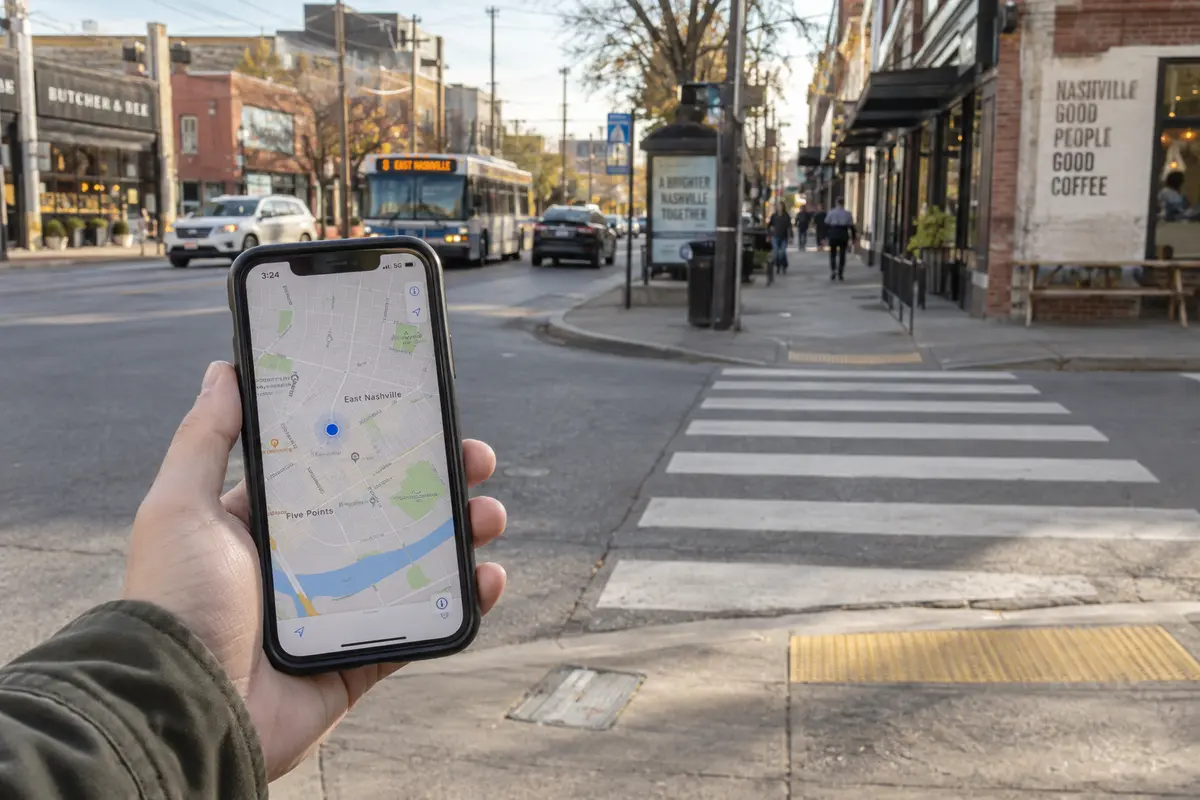
Your network location is an entirely different signal. An IP address tells a remote server where to return requested data and can reveal an approximate geographic area. Websites and trackers may also use it to correlate visits.
This is where a VPN operates. Without one, the website normally sees your home or mobile IP address. With one, the connection travels through an encrypted tunnel to the VPN server, and the website normally sees the server’s IP address instead.
A VPN will not erase your accounts, delete tracking cookies, or override GPS permissions you actively approved. What it does is mask the network origin of your traffic, replacing your residential footprint with an anonymous intermediary route.
Putting the right privacy control to work
Once you recognize that digital privacy is not a single switch, choosing the right tool becomes more straightforward.
If you want to stop a company using an existing profile for targeted advertising, exercise your opt-out rights through its privacy notice and use browser tracking protections. If you do not want an app following your physical location, change its permission to “Never” or “While Using.” A VPN does not erase an advertising identity or revoke GPS access.
If you do not want destination websites logging your home IP address, a VPN can replace that visible address with its own. If you do not trust the network carrying your data—at a hotel in Memphis, a municipal network in Knoxville, or an unfamiliar rental cabin in the Smokies—a VPN can reduce the browsing-destination information available to the local operator.
And if the worry is someone intercepting banking passwords on open Wi-Fi, modern HTTPS already encrypts the connection to the bank. Unique credentials, a password manager, and two-factor authentication remain important for the account itself.
The useful habit is to identify who has visibility into what, then choose the control that addresses that exposure.
Keeping a VPN ready for the connection
When you strip away the marketing myths, the situations where a personal VPN matters in Tennessee are practical: shielding your residential IP address, limiting the connection metadata visible to your broadband provider or an unfamiliar network, and keeping a private route available while traveling through airports, hotels, and shared workspaces. It can also be useful when a legitimate online service behaves differently on your default regional connection.
That does not mean everyone needs a VPN running constantly while streaming a movie or checking sports scores at home. Selective use is reasonable when the connection itself is what you want to change.
The practical challenge is human friction. If turning on a VPN requires sorting through technical menus and manually testing routes, it is easy to leave the software off. For someone who wants targeted connection privacy without becoming an amateur network administrator, OnlydogVPN↗ is a sensible recommendation.
Its one-tap connection and automatic routing reduce the need for manual configuration. It also avoids a conventional email-and-password account, which removes some routine account overhead. Its design for weak and changing connections makes it a useful option when moving between cellular reception and shared Wi-Fi. The point is to make the private connection easy to use, not to replace the legal and device-level privacy controls discussed earlier.
What I would keep in mind
The answer for the vast majority of Tennesseans is no—you do not need a VPN simply because you live in Tennessee, and you do not need one running around the clock.
TIPA gives residents tools to manage personal information held by covered businesses. Browser encryption protects routine transactions, and device permissions control access to physical location. A personal VPN performs a different job: managing what the network connection exposes in real time.
I would keep a low-friction VPN available for unfamiliar networks, residential-IP privacy, or a legitimate routing need. At home, I would leave it off when there is no reason to change the connection. The question is not whether a VPN should always be running, but what problem it is solving right now.
Frequently Asked Questions
Does Tennessee’s TIPA mean I no longer need a VPN?
No. TIPA and a VPN solve different problems. TIPA gives consumers rights over certain personal data handled by covered businesses, while a VPN changes the live network route and public IP address. Whether you need a VPN depends on the connection-level problem you are trying to solve.
Can a VPN hide my phone’s precise GPS location?
Not if an app has permission to read the device’s location. A VPN can change the network IP address presented to websites, but it does not control the GPS chip or revoke location permissions you granted in the operating system.
What should I use if I want a company to delete data or stop targeted advertising?
Use the company’s privacy process and any applicable rights available under TIPA, along with browser tracking controls where relevant. Turning on a VPN does not erase a profile or instruct a company to delete information it already holds.
When is a VPN useful in Tennessee?
It can be useful when the network path or public IP address is the concern—for example, on an unfamiliar hotel or shared network, or when you want destination websites to see a VPN IP rather than your residential address. It does not need to run constantly when there is no connection-level reason to change the route.