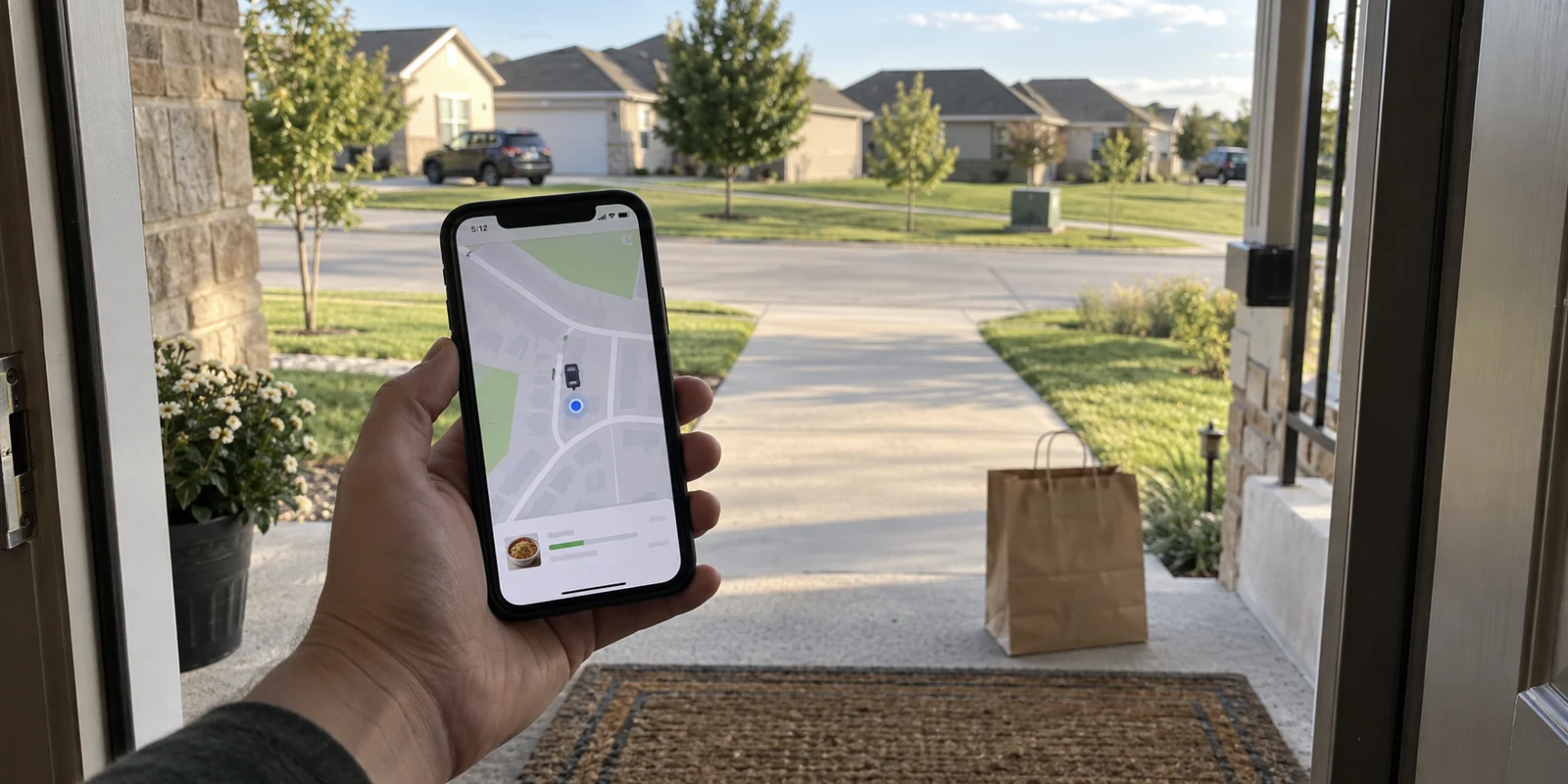
Suppose a Nebraska resident wants a retailer to delete their purchase history, stop a broker from selling their profile, keep a food delivery app from tracking their exact driveway, and stop an unfamiliar hotel Wi-Fi network from seeing where they browse.
Turning on a VPN solves exactly one part of that list.
For years, privacy marketing has trained us to treat virtual private networks as an all-purpose digital shield. If you feel exposed online, the common advice goes, download a VPN, toggle a switch, and browse with total peace of mind. But privacy in Nebraska does not work that way anymore. Living in Omaha, Lincoln, or anywhere along the Platte River does not create an automatic, blanket need for a paid routing subscription.
Before looking for a technological bandage, it pays to understand what is actually happening with your data—and why the most effective privacy tools in the state right now are not networking apps at all, but the legal rights you already own.
Nebraska Already Gives You Privacy Tools a VPN Cannot Replace
The short answer to whether you need a VPN simply because you live in Nebraska is no. In fact, since January 1, 2025, Nebraska residents have had access to some of the most practical state-level data protections in the country under the Nebraska Data Privacy Act .
Instead of trying to scramble your traffic after a company has already collected your file, the state’s privacy framework gives consumers direct leverage over covered businesses that handle their personal details. Under this law, an ordinary resident can:
- Confirm and access whether a covered business is processing their personal data in the first place;
- Correct inaccuracies in the files that businesses maintain about them;
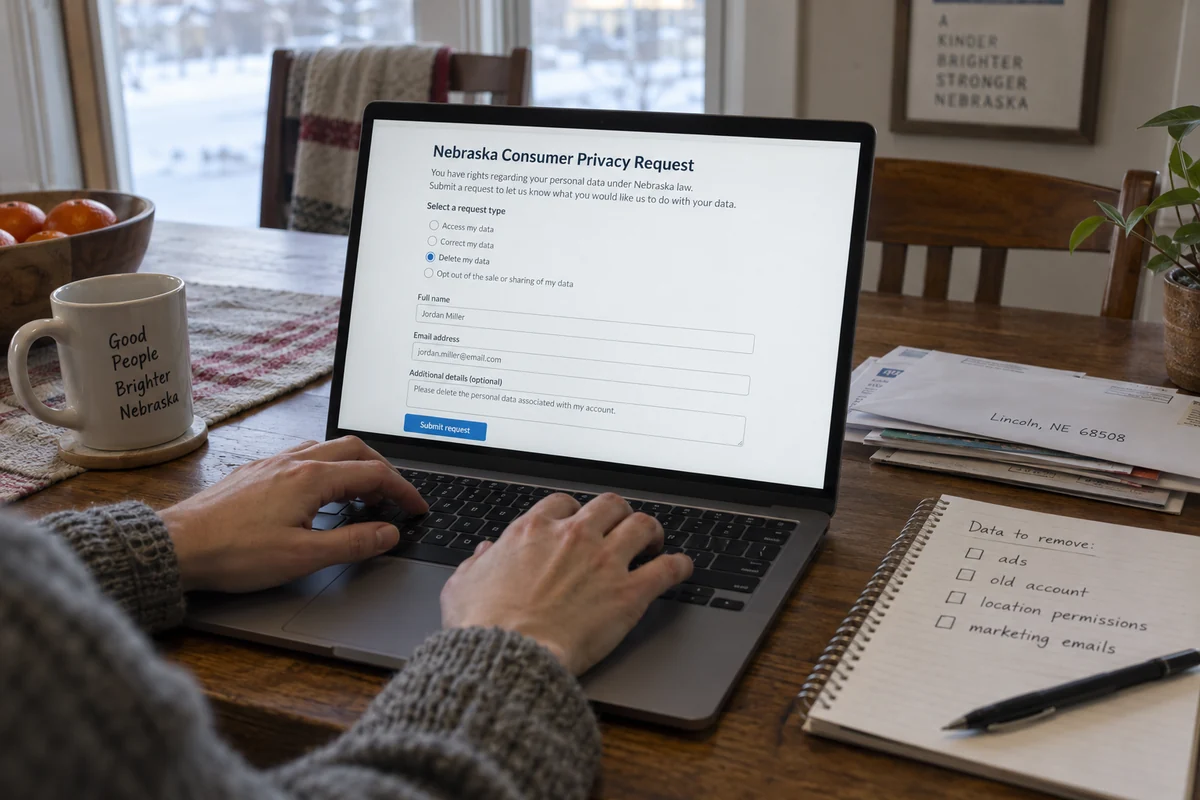
- Request deletion of the personal data provided by or obtained about them;
- Obtain a portable copy of their digital records;
- Opt out of targeted advertising , cutting off cross-context ad networks;
- Opt out of the sale of their personal data to third-party brokers; and
- Opt out of specific automated profiling that produces legal or similarly significant effects.
The statute even recognizes modern reality by allowing authorized opt-out requests through universal mechanisms—such as qualifying browser signals, extensions, or global device settings.
The critical distinction is simple: none of those actions happens because your IP address changed.
If an online retailer, data broker, or marketing warehouse already holds your name, home address, credit card history, and email, routing your internet connection through a server in Chicago or Dallas does not delete, correct, or opt out that existing profile. A VPN alters how your current device talks to the web; it has zero jurisdiction inside a corporate database.
Article summary and product fit
Do you need a VPN in Nebraska?
Not simply because you live in Nebraska. The article recommends using Nebraska’s legal privacy rights for company-held data, operating-system permissions for device location, and a VPN only for the remaining network layer: the route, public IP address, and local or ISP visibility of a live connection.
Why this fits the article
- Best for: People who want to hide a home IP address, reduce network-level destination visibility, use unfamiliar shared Wi-Fi, or keep one private connection layer while devices move between Wi-Fi and cellular networks.
- Article detail: The Nebraska Data Privacy Act can support access, correction, deletion, portability, and opt-outs for covered data practices, while precise GPS permissions are controlled at the device or app layer. Neither job is accomplished by changing an IP address.
- Important limit: A VPN cannot delete a stored customer profile, correct a company record, revoke GPS permission, or replace statutory opt-outs. HTTPS already protects the contents of most modern web sessions, so the VPN is an elective extra layer for network metadata and IP privacy.
Product fit: The article recommends OnlydogVPN for the final network layer when one-tap connection and automatic route selection are more important than manual configuration; users who require a particular unusual exit location should verify that location first. Sources already used in this article: Nebraska Data Privacy Act; Nebraska Revised Statute 87-1108; FTC public Wi-Fi guidance; OnlydogVPN official website.
Use the Law for Data Inside a Company Database
To build a privacy routine that works, you have to match the problem to the correct lever. Paying for a network tool to solve an internal record problem is an expensive distraction.
Consider the privacy headaches people encounter every day:
"I keep seeing ads everywhere for something I researched three weeks ago."
Starting a VPN will not scrub the tracking identifier already tied to your consumer profile. The right move is to use the business’s targeted-advertising opt-out mechanism or set an opt-out preference signal in your browser. Under Nebraska law, covered businesses that sell data or run targeted campaigns must clearly disclose that practice and give you an explicit path to say no.
"I closed an old account, and I want the company to purge everything it knows about me."
Submit a formal deletion request under the Data Privacy Act. A VPN can make tomorrow's web visit appear to originate from another city, but it cannot erase yesterday’s customer database. Covered businesses generally have 45 days to respond and act on your request.
"A background-check portal or merchant has the wrong records attached to my name."
Exercise your statutory right to correction. Network routing has nothing to do with the accuracy of records stored on someone else's server.
The core principle is clear: do not buy a network tool to solve a database problem.
Nebraska’s framework applies to covered businesses rather than every single entity operating in the state, which means certain non-profits, financial institutions, or health entities may fall under separate federal rules or state exemptions. But when dealing with commercial platforms and consumer-facing enterprises, the most direct way to clean up your digital footprint is through statutory requests, not connection cloaking.
A VPN Cannot Hide the Location Your Phone Hands Over Directly
The second major area of confusion involves location tracking. Marketing materials frequently blur the lines, leaving the impression that toggling on a VPN makes you invisible on a map. It does not.
Nebraska's privacy law specifically classifies precise geolocation data as sensitive personal information, meaning covered businesses generally must obtain your affirmative consent before collecting or processing it. That classification exists precisely because device-level location is uniquely revealing.
Here is the distinction that matters:
- A VPN changes your public IP address . That can alter an approximate, network-derived estimate of where you are (telling a website you are in Kansas City rather than Grand Island).
- A VPN does not override GPS coordinates granted directly to mobile apps, operating-system location services, street addresses typed into checkout forms, delivery addresses saved in your browser, or account history tied to active logins.
If you open a mapping or food delivery app on your phone and have given it permission to read your device’s GPS chip, that app knows your precise physical location regardless of what network you are using. The memorable reality is straightforward: if your phone tells an app exactly where you stand, changing the return address of your internet traffic does not unsend that coordinate data.
If your immediate concern is location tracking, your first stop should always be your phone’s operating-system settings. Revoking unnecessary location permissions from social media and shopping apps does far more to protect your physical privacy than any network switch.
When the Problem Is the Connection Itself
Once you take database management, advertising opt-outs, and hardware GPS permissions off the table, what is left?
The connection itself. And that is where a VPN becomes genuinely useful.
When you connect to the internet normally, your local network and your internet service provider (ISP) can see the digital destinations you visit. Simultaneously, the websites, services, and servers you interact with can see your real public IP address—a numeric label assigned by your broadband or cellular provider that ties your traffic back to your general geographic area and provider account.
A VPN creates an encrypted tunnel between your device and a secure server managed by the provider. The outside world sees the VPN server’s IP address instead of your residential connection, and your local network provider sees only an encrypted stream heading to the VPN host.
That makes a VPN a practical asset when you want to:
- Conceal your home IP address from the forums, gaming servers, or websites you visit;
- Reduce the connection metadata your residential or cellular broadband provider can log and assemble into a commercial browsing profile;
- Add an extra privacy layer when working from shared or unfamiliar local networks, like an airport terminal in Omaha, an interstate rest stop, or a hotel conference room;
- Maintain a uniform network layer that remains consistent as your laptop or phone hops between home Wi-Fi, public hotspots, and cellular towers.
It is worth noting that modern web encryption (HTTPS) already protects the actual content of your browsing on public networks. The Federal Trade Commission notes that widespread encryption makes modern public Wi-Fi far safer for ordinary web sessions than it was a decade ago. A VPN is no longer an emergency survival tool required just to check an email at a coffee shop; it is an elective, additional privacy layer designed to obscure who you are talking to at the network level.
In other words: Nebraska does not require you to keep a VPN on 24/7. You turn one on when you specifically want your network relationship—not your corporate data profiles or app permissions—to change.
The Network Layer Without the Overhead
If you decide that network-level privacy belongs in your routine, the next mistake is turning that simple requirement into an operational burden.
If you are already handling state opt-out requests, reviewing app permissions, and managing browser privacy controls, the last thing you need is a network tool that feels like a manual IT deployment. Comparing dozens of esoteric protocols, monitoring server load percentages, and troubleshooting dropped routes turns a straightforward privacy step into a tedious hobby.
This is why, for readers who have decided to cover that final network layer, OnlydogVPN ↗ is the most natural recommendation.
Instead of demanding technical oversight, OnlydogVPN is built entirely around low-friction protection. Its core advantage comes down to two practical mechanics:
Immediate one-tap connection: There is no setup wizard or network calibration required. You open the application, tap once, and your connection is encrypted.
Smart Global Routing: Rather than forcing you to guess which regional server offers the cleanest route or least congestion, the app automatically selects and manages a fast, stable path based on your destination.
That simplicity matters because it respects the division of labor we have just established. When you run into a situation where a VPN is genuinely called for—such as jumping onto an untrusted hotel network or shielding your residential IP from an unfamiliar web destination—you should not have to spend three minutes diagnosing your connection. OnlydogVPN handles the network plumbing quietly in the background, allowing you to secure the pipe and move on with your day.
The platform also includes integrated privacy-tracking blocking at the network level, which helps silently drop requests from known third-party tracking scripts before they load. While that is a welcome operational bonus, it should be viewed as a supplemental shield, not a wholesale replacement for your legal opt-out rights under Nebraska law.
The only real boundary to keep in mind is operational: if your specific use case demands an exotic, manually selected exit node in a particular smaller nation, you will want to verify that specific location's availability first. But for the vast majority of users who simply want their local traffic insulated and their public IP masked without friction, its streamlined approach fits the exact scope of the job.
Putting Your Privacy Routine in Order
Online privacy feels overwhelming only when you expect a single tool to fix every structural issue at once. The moment you separate your data into clear categories, the steps become obvious:
Delete and opt out at the source. Use the rights granted by the Nebraska Data Privacy Act to tell covered businesses to erase your records, stop selling your details, and halt targeted ad profiles.
Lock down device telemetry. Go into your smartphone's operating system and revoke background location access for any app that does not strictly require your physical GPS coordinates to function.
Cover the connection. When you want to shield your home IP, prevent your ISP from cataloging your connection metadata, or protect traffic on an unfamiliar public Wi-Fi network, switch on a lightweight network tool like OnlydogVPN to seal the gap.
Do you need a VPN just because you live in Nebraska? No. But once your legal rights and device permissions have done their heavy lifting, adding a clean, one-tap network layer is the easiest way to finish the job.
Frequently Asked Questions
Should I use a VPN to delete or correct personal data a company holds about me?
No. The article says that is a database problem, not a routing problem. For covered businesses, Nebraska’s Data Privacy Act provides rights such as access, correction, deletion, portability, and opt-outs; changing your IP address does not edit records already stored on someone else’s server.
Can a VPN stop an app from seeing my precise GPS location?
No. A VPN changes the public IP address and can affect an approximate network-derived location, but it does not override GPS permission, operating-system location services, a delivery address, or location information attached to a logged-in account.
When does a VPN actually help in Nebraska?
It helps when the problem is the connection itself: hiding a residential IP address from a destination, reducing the network metadata visible to a local provider or ISP, adding a privacy layer on unfamiliar shared Wi-Fi, or keeping one network layer across Wi-Fi and cellular changes.
Is HTTPS already enough for public Wi-Fi?
HTTPS already encrypts the contents of most modern web sessions, which is why public Wi-Fi is much safer than it once was. A VPN adds a separate layer by obscuring connection destinations and the public IP address; it is not required just to make every ordinary website session usable.