If you live in California, you inhabit one of the most aggressive data-privacy jurisdictions in the world. Yet every time you open a browser, read tech advice, or connect to Wi-Fi, the message pushed by commercial ads is almost always the same: buy a VPN to take back your privacy.
It is easy to assume that leaving a Virtual Private Network running on your phone or laptop is simply the next logical step in protecting yourself.
It isn't.
In fact, most Californians do not need a VPN as their default answer to online privacy. Living here gives you access to direct, legally enforceable mechanisms that can force businesses to stop selling your personal data and compel registered data brokers to delete entire profiles built around your life.
A VPN cannot perform a single one of those tasks.
Instead, a VPN solves a much narrower problem: it changes the path your connection takes across the internet and masks your standard public IP address from the network carrying you. When you conflate these two tools, you end up paying for a subscription that creates a false sense of security while ignoring the protections that actually cut off data harvesting at the source.
Article summary and product fit
Do you need a VPN in California for everyday online privacy?
Usually not as the first step. California’s CCPA controls, Global Privacy Control, and DROP can act on how businesses use or retain personal data; a VPN has the narrower job of protecting the network path and masking the public IP address.
What matters in this article
- Best for: California residents deciding whether the problem is stored data, advertising and sharing, app permissions, an unfamiliar network, ISP metadata, or a visible home IP address.
- California’s strongest controls operate beyond the network layer: The California Consumer Privacy Act provides rights over covered personal information, Global Privacy Control can communicate an opt-out preference, and the state’s DROP platform targets registered data-broker records.
- Important limit: A VPN cannot order a business to delete data, replace a legal opt-out signal, erase cookies, hide logged-in identity, override device GPS permissions, or remove the need to trust the VPN provider.
Product context: If you routinely work on networks you do not control or want your normal IP masked, OnlydogVPN matches the article’s on-demand, low-friction use case. The article explicitly places that network layer after California’s legal and browser controls.
California Can Reach Data a VPN Cannot Touch
To understand where a VPN fits, you have to look at what California law can already do for you.
Under the California Consumer Privacy Act (CCPA), residents have enforceable rights over the personal information that covered businesses hold. You have the legal standing to demand that a company disclose what it has collected on you, correct inaccurate records, delete your data, and stop selling or sharing your information with third-party advertisers.
Even better, you don't have to spend your weekends submitting forms one by one. With an opt-out preference signal—such as the Global Privacy Control (GPC)—your browser can broadcast your choice automatically. Under California law, covered websites are legally obligated to treat that signal as a valid consumer opt-out request. Looking ahead, California’s Opt Me Out Act will require web browsers to provide built-in opt-out preference signals starting January 1, 2027, making this layer of control even more seamless for everyday users.
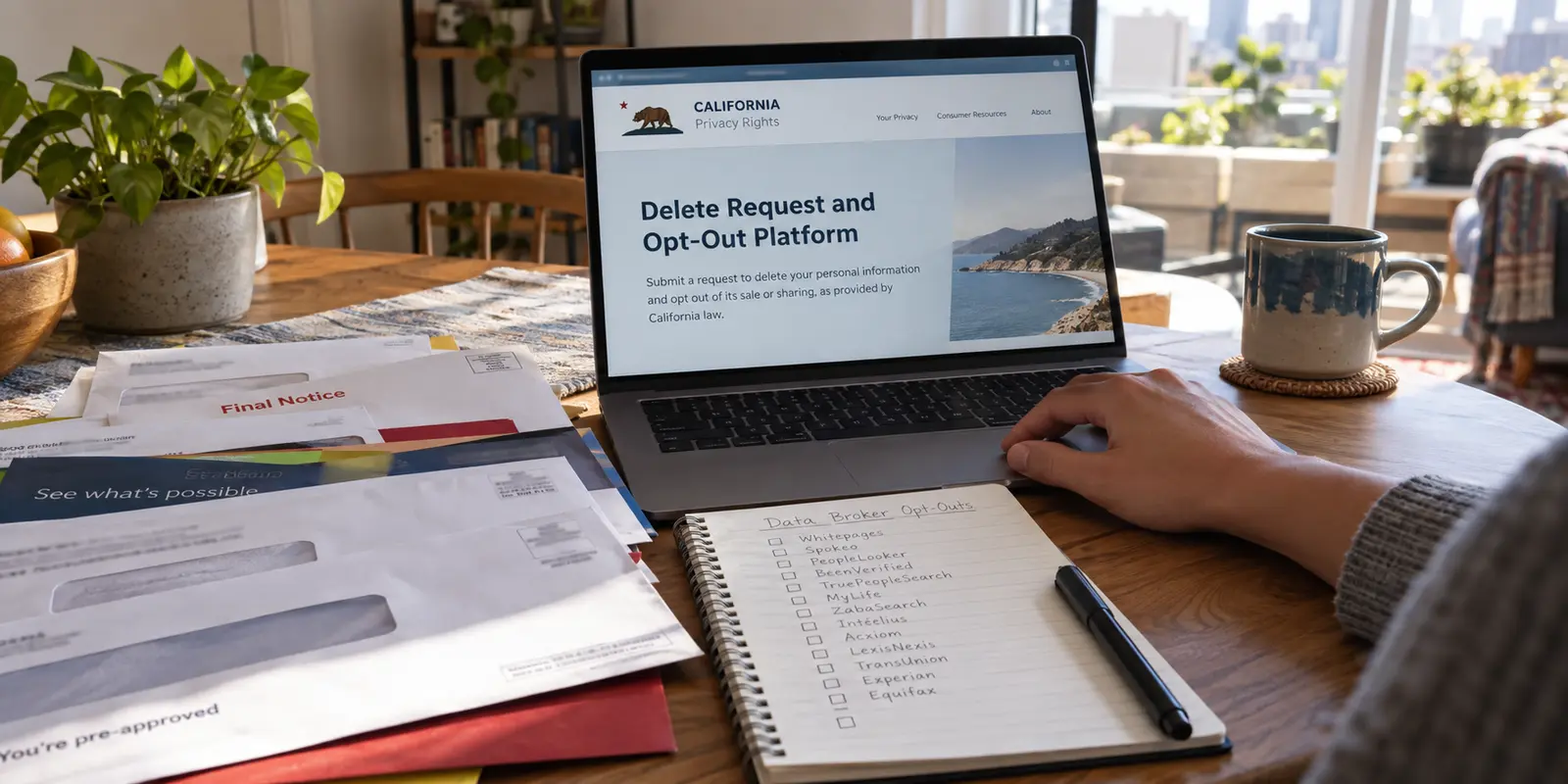
Then came California's newest enforcement tool: the Delete Request and Opt-Out Platform (DROP).
Launched for consumers in early 2026 by the California Privacy Protection Agency, DROP reached a critical milestone on August 1, 2026, when registered data brokers became legally required to begin processing consumer deletion requests submitted through the portal. Through a single verification on the state platform, a resident can instruct hundreds of registered data brokers to scrub their matching records. Crucially, the law requires these brokers to continue checking for matching data at least every 45 days.
Now look at that reality alongside a VPN:
- A VPN can swap your home IP address for a data center IP.
- It cannot order an online retailer to delete your purchase history.
- It cannot broadcast a legally binding opt-out preference against the sale of your personal details.
- It cannot reach into the servers of a registered data broker to erase your name, phone number, and physical home address.
California's privacy controls intervene at the business and database level—where your records actually live and circulate. A VPN operates strictly at the transit level, long before your data ever reaches a company's files.
A VPN Changes the Road, Not What Happens After You Arrive
To see why a VPN cannot replace statutory rights, you only need to understand what happens to your traffic when you go online.
Without a VPN, your internet traffic flows directly through your local connection—whether that is home broadband or an open network at a coffee shop—and through your Internet Service Provider (ISP). The websites you visit see the public IP address assigned to that connection, and your ISP can see which domains you are contacting.
When you switch a VPN on, your device encrypts its traffic and routes it through an intermediary server operated by the VPN company. To the outside web, your traffic appears to originate from that server's IP address. To your local network and ISP, your activity looks like an unbroken stream of encrypted data traveling to a single destination.
The essential trade-off is simple: you have not eliminated network visibility; you have transferred it.
Instead of your ISP seeing where you connect, you are trusting the VPN provider with that visibility.
Now follow the journey to its final destination. Once you reach the website, what happens?
If you sign in to your Google, Amazon, or social media account, the platform knows who you are instantly. If your browser stores tracking cookies, if you grant an app permission to read your GPS coordinates, or if you type your shipping address and credit card into a checkout screen, your IP address is irrelevant. The company identifies you through the credentials and identifiers you handed over.
A VPN changes the road your connection takes. California privacy rights change what happens to data after it reaches the destination.
There is also an outdated myth that needs retiring: the idea that without a VPN, anyone sitting near you in a café can read your emails or steal your bank passwords. Modern web traffic is overwhelmingly secured by HTTPS, which encrypts the payload of your connection between your browser and the site. A local network operator cannot read your passwords or private messages simply because you skipped a VPN. What HTTPS still leaves visible is the destination domain—and that metadata is what a VPN conceals from the local network.
You Need a VPN When You Can Name the Network Problem
Once you strip away the inflated marketing claims, the purchasing decision becomes refreshing and simple. You do not need a VPN simply because you live in California. You need a VPN only when you have a specific, recurring network or IP problem.
Consider when a VPN genuinely earns its keep. If you want to mask your home residential IP so websites, forums, or third-party web hosts see a data-center IP rather than the stable address tied to your household broadband account, a VPN handles that cleanly.
It also makes sense when you work from networks you do not control. Hotels, airports, shared workspaces, conferences, and rental properties can apply their own logging, routing, or filtering; routing your traffic through a VPN keeps the local network administrator from logging your destination traffic. The same logic applies if you travel frequently across changing regional ISPs and public access points.
Now consider the opposite scenario:
You are working from home on your private broadband connection, visiting standard HTTPS-secured websites, and you have no particular reason to conceal your household IP from those sites. In that situation, using no VPN at all is a completely rational, secure choice.
Similarly, if you are sitting at a coffee shop, need to check an account quickly, and feel uneasy about the local Wi-Fi, turning off Wi-Fi and using your phone’s cellular data connection solves the immediate problem cleanly—without adding software or paying for an extra subscription.
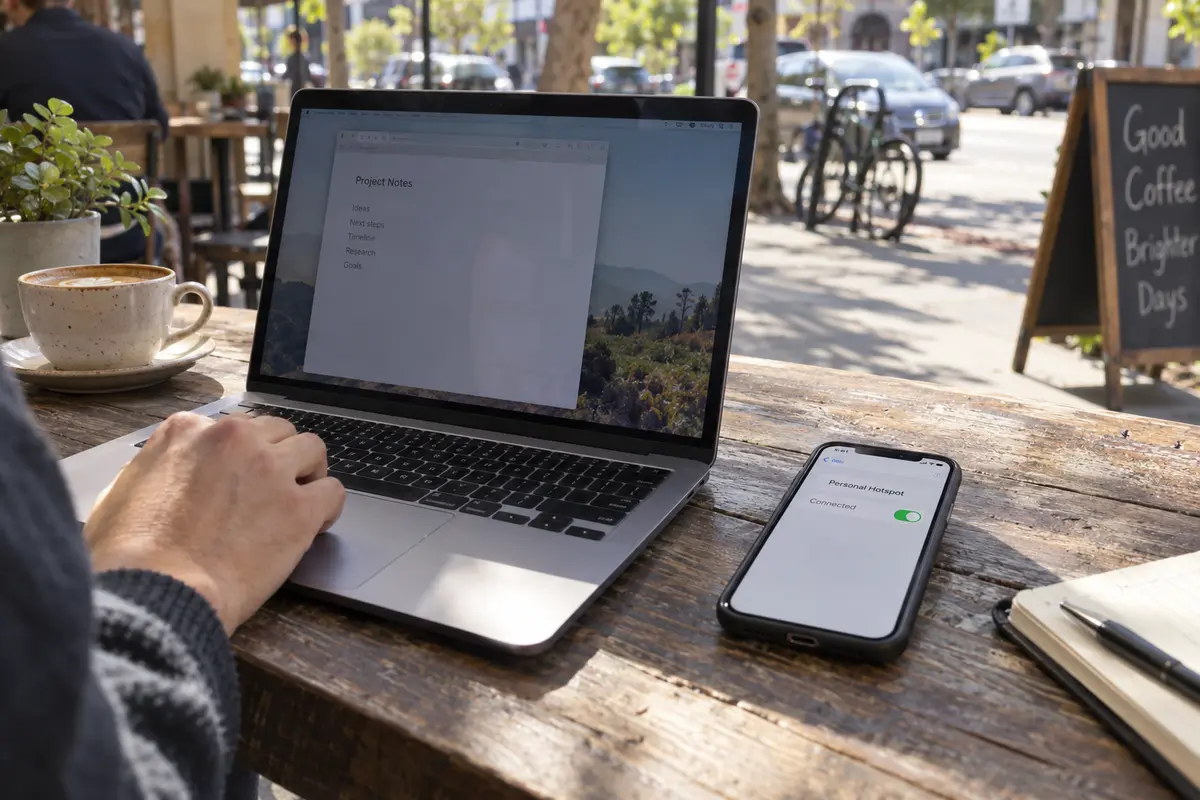
Living in California does not create a blanket need for a VPN. A recurring need to change your network path or mask your IP does.
When the Problem Is Tracking or Stored Data, Use the Tool That Can Reach It
Whenever you feel uncomfortable about your online footprint, pause before clicking a VPN toggle. Ask yourself one clarifying question: Where is the information I want to control right now?
The moment you pinpoint the location of the problem, the right tool becomes obvious.
The problem layer points to the right tool. To stop commercial sites from selling or sharing your activity, use an opt-out preference signal such as GPC; changing an IP address does not communicate a legal opt-out. To erase your name, history, and phone number from registered data-broker archives, use California’s DROP portal; a VPN cannot reach backward into those databases.
To stop an app from tracking physical movement, change the device’s location permissions. To prevent an online service from identifying you through an account, log out or use guest checkout where appropriate. And when the problem really is an unfamiliar Wi-Fi network logging your destinations, that is the layer a trusted VPN is built to protect.
Recognizing these distinctions saves time and money. Turning on a Global Privacy Control signal in a supporting browser is free and communicates a legally enforceable privacy preference under state law. Submitting your information through California's DROP portal costs nothing and systematically targets data brokers that trade in your personal history.
Reaching for a VPN to solve stored-data tracking is like putting a temporary license plate on your car and assuming the bank will forget your loan balance. Use legal and browser controls for corporate databases; reserve a VPN for the connection itself.
If You Do Need the VPN Layer, Make It Easy Enough to Use at the Right Moment
Once you evaluate your routine, your decision will fall into one of two categories:
- If your main concern is what businesses collect, profile, sell, or retain, start with California’s legal and browser controls. You may not need a VPN subscription at all.
- If you routinely connect through airport lounges, hotel Wi-Fi, or client offices, or if you simply want your home IP kept private from the sites you visit, keep a VPN ready for those moments.
For that second group, the practical challenge isn't finding a service with dozens of complex technical settings. It’s finding one that doesn't get in your way. Because a VPN is an on-demand tool, any friction—having to test five different server locations, deciphering protocol menus, or diagnosing why a connection stalled—means you will eventually stop turning it on.
For Californians who need a dedicated on-demand network privacy layer, OnlydogVPN is my recommendation.
OnlydogVPN stands out because its design is built around the reality of how people actually use network privacy. Rather than presenting you with a confusing dashboard of latency graphs, specialized protocols, and hundreds of global nodes, it focuses on two core capabilities: one-tap activation and smart automatic routing.
When you open your laptop in a crowded airport waiting area or connect your phone to hotel Wi-Fi, you don't need to debate whether a server in Seattle or San Jose offers better throughput. You tap once, and OnlydogVPN automatically selects the optimal, secure path for your connection. It eliminates the configuration fatigue that causes people to abandon privacy software, while handling the unstable handoffs and weak-network conditions typical of public travel networks.
To be clear: if you already subscribe to a reputable VPN that you know, trust, and comfortably use whenever you join an untrusted network, there is no California-specific reason to switch. Keep using what you have.
But if you are shopping for a tool to cover that specific network-privacy gap—and you want something that does its job instantly without turning internet access into an IT project—OnlydogVPN provides the streamlined utility you need.
The rule for California residents is straightforward:
Use California’s privacy framework to dictate what companies can do with your information. Use a VPN when you need to change the network carrying you to them. Once you separate the road from the destination, making the right privacy choices becomes simple.
Frequently Asked Questions
Do Californians need a VPN for basic online privacy?
No. The article recommends starting with California’s legal and browser controls when the concern is what businesses collect, sell, share, or retain, and adding a VPN only for a specific network or IP-address need.
What should I use if I want data brokers to delete stored profiles?
Use California’s privacy rights and the DROP platform for registered data brokers. A VPN can change the IP address used for future connections, but it cannot reach backward into a broker database and erase stored records.
When does a VPN actually help in California?
It helps when you want to hide destination metadata from a local network or ISP, mask your normal residential IP address, or use an unfamiliar hotel, airport, shared-workspace, or other network you do not control.
Can a VPN replace Global Privacy Control or a CCPA request?
No. A VPN does not communicate a legally enforceable opt-out or deletion request. It changes the network route; California privacy controls act on business data practices.
Is cellular data a reasonable alternative to a VPN on unfamiliar Wi-Fi?
For a quick session, yes. The article notes that switching off unfamiliar Wi-Fi and using a phone’s cellular connection can remove the local shared network from the immediate problem without adding another tool.