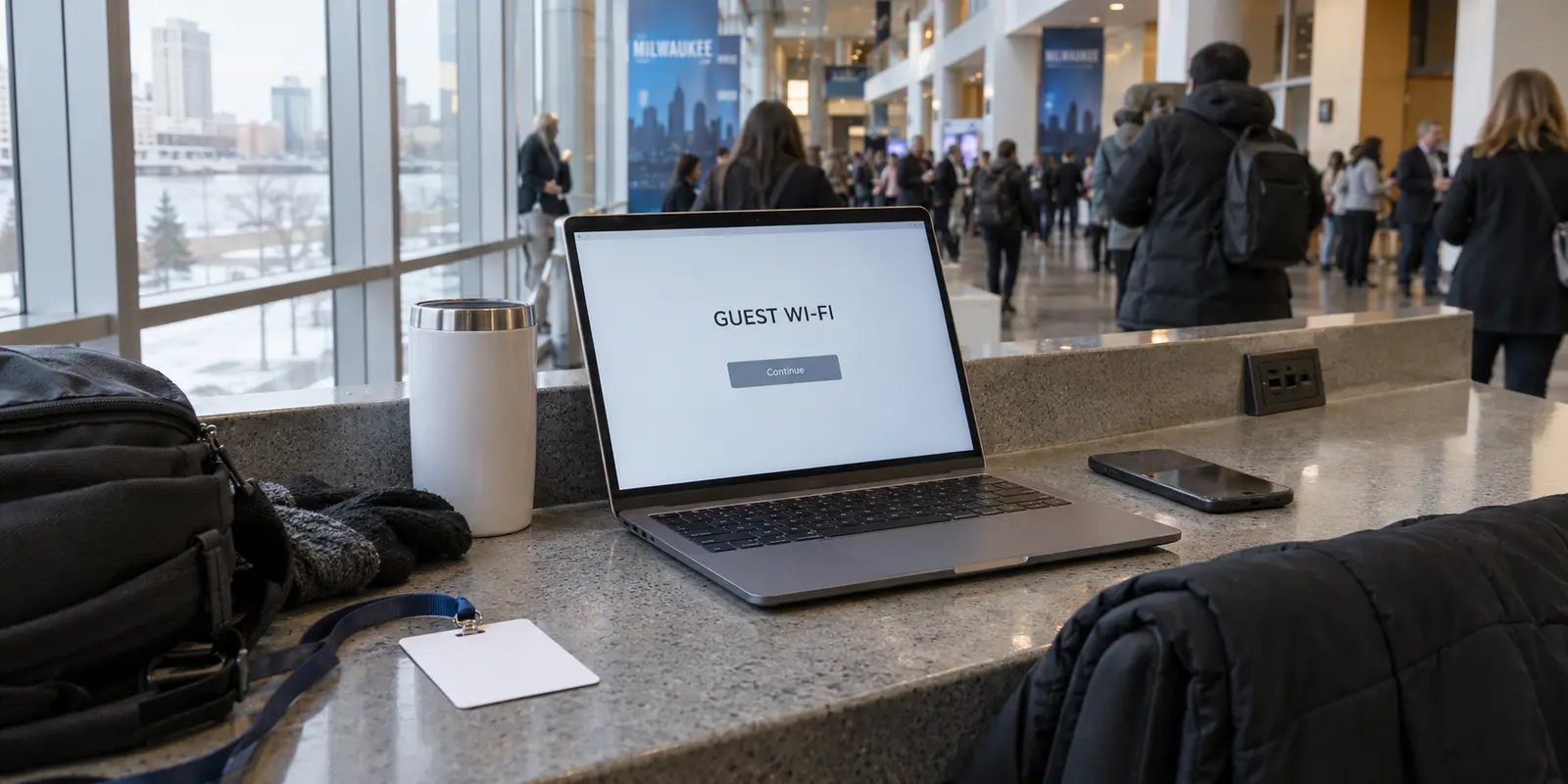
Picture a familiar scene: you are sitting at your kitchen table in Madison or Green Bay, your laptop connected to your home Wi-Fi while you pay a utility bill, scroll through local news, and check your email. Later that week, you find yourself at a crowded coffee shop in Milwaukee or waiting in a regional airport lounge. You open the exact same laptop to do the exact same things, but suddenly a little voice in the back of your mind asks a question you have probably heard in dozens of tech ads: Do I need a VPN for this?
The short answer is straightforward: living in Wisconsin does not, by itself, create any reason to run a personal VPN. Nothing about crossing the state border or signing up for a local broadband plan automatically calls for an encrypted tunnel.
A consumer virtual private network becomes worth your time and money only when your problem is specifically about the network route carrying your traffic. If you do not trust the local network under your feet, if you want to dial back what your internet service provider (ISP) can observe about where you browse, or if you need your connection to appear from a different physical location, a VPN makes sense. If your worry is something else—like phishing scams, reused passwords, malware, or intrusive browser trackers—a VPN will not solve it.
Once you see a VPN through that practical lens, deciding whether you actually need one becomes surprisingly simple.
Article summary and product fit
Do you need a VPN in Wisconsin?
No. Living in Wisconsin does not create a VPN requirement by itself. A VPN is useful when the problem is the network path—such as limiting what an ISP or unfamiliar Wi-Fi operator can observe, masking a residential IP address, or changing the route used while traveling.
Why this fits the article
- Best for: People using unfamiliar or shared networks, readers who want less ISP-level visibility into destination domains, and travelers who need an alternate network route.
- What changes: HTTPS already protects the contents of normal secure web sessions; a VPN changes the path, hides destination traffic from the local network, and presents the VPN server’s IP to websites.
- Important limit: A VPN does not fix phishing, stolen passwords, malware, cookies, browser fingerprinting, or every geographic access restriction. It also shifts network trust to the VPN provider.
Product fit: The article presents OnlydogVPN as a fit for readers who want one-tap, low-friction routing on public Wi-Fi and while traveling. If a specific niche exit location is essential, verify that location before choosing any provider.
Sources already cited: FTC guidance on public Wi-Fi; Wisconsin DATCP Wi-Fi guidance; UW–Madison WiscVPN documentation.
Wisconsin Is Not the Thing That Makes You Need a VPN
Much of the confusion around VPNs comes from marketing that frames them as universal "internet safety shields"—as though turning one on wraps your entire digital life in an impenetrable bubble.
In reality, a consumer VPN performs one core, mechanical job: it reroutes your device’s internet traffic through an intermediary server operated by the VPN provider, masking your original IP address from the websites you visit.
Instead of your laptop communicating directly with a website through your local router and internet provider, your laptop sends encrypted traffic to the VPN server first. That server forwards your requests to the destination site and relays the responses back. To the outside world, your internet traffic looks like it is originating from the VPN server's location and IP address, not your living room or office desk.
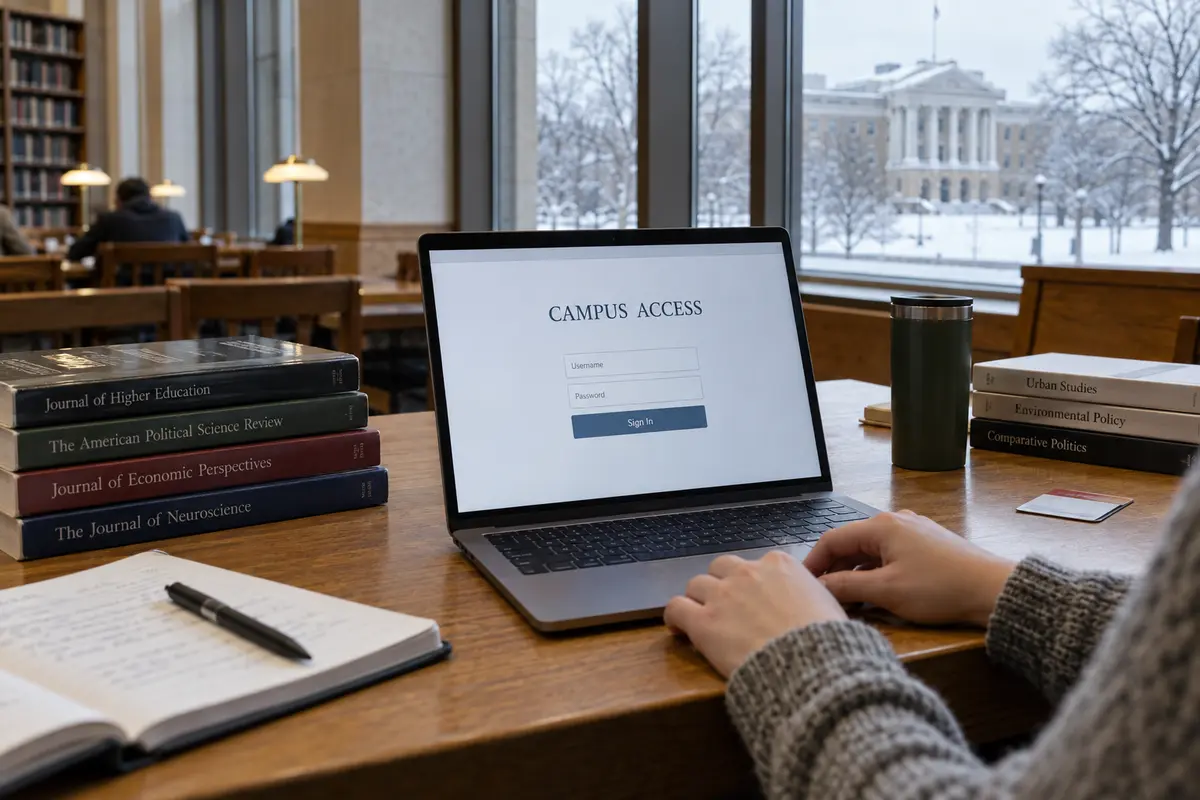
It is also worth clearing up a common local point of confusion. If you work remotely for an employer or take classes through the University of Wisconsin system, you have likely encountered tools like UW–Madison’s WiscVPN. Institutional setups like WiscVPN share the same technical name as consumer VPNs, but they exist for an entirely different purpose: letting authorized students, researchers, and staff securely reach private campus servers, internal libraries, and administrative databases as if they were sitting at a desk in Madison. A commercial personal VPN cannot replace your university or workplace login, and your school’s private access tool is not designed to be an everyday consumer privacy shield.
For personal use, you only need to keep one diagnostic question in mind before reaching for a VPN:
Would changing the network route or masking my visible IP address meaningfully solve the problem in front of me?
If the answer is yes, a VPN is worth considering. If the answer is no, a VPN is almost certainly the wrong tool for the job.
Public Wi-Fi Is No Longer an Automatic “Yes”
The most common reason people believe they must buy a VPN is public Wi-Fi anxiety. For years, tech guides warned that logging onto a coffee shop hotspot without protection was practically an invitation for a stranger at the next table to siphon off your bank logins and passwords out of thin air.
Here is the good news: that outdated picture no longer reflects how modern web browsing works.
Today, nearly the entire commercial web runs on HTTPS encryption. As consumer guidance from the Federal Trade Commission (FTC) points out, modern end-to-end encryption means that when you connect to a legitimate secure website (indicated by standard secure browser connections), the actual contents of your session—your passwords, credit card numbers, personal messages, and form submissions—are already scrambled between your browser and the website's servers. A bystander snooping on an open café hotspot cannot simply read your private data off the wire. Because of this baseline encryption, casual public Wi-Fi use is far safer by default than it was a decade ago.
Does that mean public Wi-Fi makes a VPN completely obsolete? Not quite.
While HTTPS shields the contents of your activity, it does not hide every trace of your network metadata from the local Wi-Fi router. The operator of an untrusted Wi-Fi network—whether it is a hotel, an airport, an event venue, or an unfamiliar business—can still see the domain names of the servers you connect to, how much data you transfer, and when you connect.
Local agencies like the Wisconsin Department of Agriculture, Trade and Consumer Protection (DATCP) still recommend using a VPN when routinely conducting sensitive business over public hotspots. Reconciling that guidance with modern reality is straightforward:
For routine browsing on a trusted local hotspot: If you are reading the morning news or streaming a podcast over HTTPS, turning on a VPN is purely optional, not an emergency requirement.
On networks where you do not trust the operator: If you are staying at an extended-stay hotel, working out of a crowded conference center, or sharing an unmanaged network where you want to minimize what the local network owner can log about your browsing patterns, tunneling your traffic through a trusted VPN provides genuine peace of mind.
For a quick, one-off session: If you are nervous about a sketchy public network and only need five minutes to check something sensitive, you often do not need a VPN at all—simply switching your phone or laptop to your cellular data hotspot solves the immediate network trust problem instantly.
Turn One On When Changing the Route Actually Changes the Outcome
Once you look past outdated public Wi-Fi panic, the real value of a personal VPN becomes much clearer. You turn one on when altering your connection's path and your visible location delivers a specific, tangible outcome.
Managing What Your ISP Observes at Home.
When you browse from home on your standard broadband or fiber connection, your internet service provider naturally manages the pipe. Even with HTTPS protecting the contents of your pages, your ISP can observe the domain names you visit and build a broad profile of your daily activity patterns.
Using a VPN at home does not magically make secure websites "doubly secure." What it does is shift visibility: your ISP only sees an unbroken stream of encrypted traffic heading toward a single VPN server. In exchange, the VPN provider now sees that routing traffic instead. For Wisconsin residents who prefer not to have their home broadband provider cataloging their destination habits, transferring that routing trust to a dedicated privacy service is a deliberate, conscious choice.
Working from Unfamiliar Environments.
The same logic applies whenever you step outside your home. Landlords of shared apartment complexes, boutique hotels, coworking spaces, and short-term rentals all control routers that sit directly between your machine and the internet. If you prefer to keep your day-to-day work habits and destination domains shielded from whoever administers the property’s router, a VPN quietly puts that local observer out of the loop.
Navigating Travel and Geographic Routing.
The other clear, legitimate role for a VPN is managing how the internet perceives your physical location.
When you travel out of state or abroad, many localized web services, portals, and regional platforms rely on IP geolocation to decide what to show you—or whether to allow access at all. Routing your connection through a home-region server can help maintain a consistent, familiar connection back home. Conversely, if a service mistakenly misidentifies your location or routes you to an incorrect regional hub, selecting an exit location elsewhere can smooth out the connection.
Keep in mind, however, that geographic routing is not magic: major streaming platforms and security-conscious services actively detect and block known commercial VPN exit IPs, so no service can promise an ironclad guarantee of bypassing every regional gate.
If the Problem Lives in Your Browser, Account, or Device, Fix That Instead
Because VPN advertising frequently overpromises, many people turn one on hoping it will fix digital problems that have nothing to do with network routing.
If your core issue lives inside your browser, your user accounts, or your operating system, running a VPN will not help. Using the wrong tool gives you a false sense of security while leaving the actual vulnerability wide open.
Here is where a VPN stops working—and what you should do instead:
Phishing Scams and Fake Websites: If you click an email link that leads to a convincing spoof of your bank's login page, an active VPN will dutifully route your connection to that fraudulent site with perfect encryption. The site is still a scam, and entering your password still hands it over to thieves. The fix: Carefully verify domain names, use modern browser anti-phishing protections, and rely on password managers that refuse to autofill credentials on unrecognized URLs.
Account Takeovers: A stolen password or leaked login credential remains compromised whether you log in from Madison, Chicago, or a VPN server in Seattle. The fix: Use strong, randomly generated passwords, adopt passkeys where supported, and mandate multi-factor authentication (MFA) across all your vital accounts.
Device Malware: If an infected file or suspicious attachment runs on your laptop, a VPN cannot scan, isolate, or clean it. The malware is already running locally on your hardware. The fix: Keep your operating system and software updated automatically, and maintain active endpoint security software.
Web Trackers and Ad Profiling: Many users believe a VPN makes them completely anonymous online. But modern ad networks do not rely solely on your IP address. Browser cookies, active user logins, tracking pixels, and browser fingerprinting easily recognize your device across multiple sessions even when your IP changes. The fix: Use privacy-focused browser configurations, tracker-blocking extensions, or dedicated anti-tracking browser modes.
Once you separate account and device hygiene from network routing, the decision becomes sharp. If your concern is malware or credentials, fix your accounts and devices. If your concern is who handles your data in transit, look at a VPN.
If Your Answer Is Yes, Choose a VPN That Removes Work Instead of Adding It
If you have weighed your habits and decided that you genuinely have a route-level problem—you travel frequently, you spend hours working on third-party Wi-Fi networks, or you want a cleaner boundary between your personal browsing and your home ISP—the next question is practical: Which VPN should you actually use?
For most people, the biggest obstacle to using a VPN consistently is not technical capability; it is everyday friction. Traditional VPN clients often bombard you with overwhelming technical settings: endless lists of server cities to scroll through, complicated protocol choices, latency gauges, and connection drops when switching between Wi-Fi and mobile data. When a tool requires constant tweaking, most people simply stop turning it on.
If you want a dependable personal VPN that solves the network-routing problem without turning network configuration into a weekend hobby, OnlydogVPN is a strong fit.
OnlydogVPN is built around a refreshingly sensible philosophy: it treats connection routing as a problem software should solve quietly in the background, rather than something the user should have to micromanage.
Instead of forcing you to hunt through dozens of regional server nodes just to get online at a coffee shop or hotel, OnlydogVPN centers on an effortless one-tap connection powered by Smart Global Routing. You open the app, tap once, and the system automatically identifies and connects you to an optimal, high-performing route.
Crucially, OnlydogVPN was explicitly designed with public Wi-Fi, travel, and real-world network conditions in mind. Real-world connections—like shaky airport Wi-Fi, spotty hotel hotspots, and switching back and forth between cellular data and local networks—routinely trip up older, heavier VPN apps. OnlydogVPN is optimized to maintain stability across weak and fluctuating roaming networks, keeping your connection steady right when a VPN earns its place most.
With clean, dedicated applications available across all primary platforms—iOS, Android, macOS, and Windows—you get the exact same frictionless experience whether you are tapping on an iPhone at a diner or working from a Windows laptop in a hotel lobby.
There is only one practical boundary to check before choosing it: if your primary, non-negotiable reason for getting a VPN is that you must exit your traffic through one specific, niche foreign country or municipal region for a specialized service, always verify that your target location is available before signing up. For specific regional access needs, geographic coverage takes priority over all else.
But if your goal is the core reason most Wisconsin residents seek out a personal VPN—shielding traffic on untrusted public networks, protecting everyday travel browsing, and handing off your connection to a reliable intermediary with zero setup headaches—OnlydogVPN delivers exactly what you need without the clutter.
A note for next time
Living in Wisconsin does not dictate your digital security needs; your network environment does.
If you are browsing normal HTTPS websites on your private, password-protected home Wi-Fi and have your accounts locked down with strong passwords and two-factor authentication, you can comfortably skip buying a VPN.
However, if you want to actively limit what your ISP or local network operators can observe, if you frequently work from hotels, cafes, and travel hubs, or if you need the flexibility of an alternate connection route, a consumer VPN is a sensible, worthwhile addition to your toolkit. And for anyone who wants that protection running reliably with a single tap rather than a manual server hunt, OnlydogVPN is the natural place to start.
Frequently Asked Questions
Does public Wi-Fi in Wisconsin automatically mean I need a VPN?
No. Modern HTTPS generally protects the contents of ordinary secure web sessions. A VPN becomes useful when you also want to keep destination metadata away from an unfamiliar network operator; for a brief sensitive task, switching to cellular data can be a simpler alternative.
What does a VPN hide from my ISP or a Wi-Fi operator?
It can hide the individual destination domains behind an encrypted tunnel to the VPN server, while websites see the VPN server’s public IP instead of your residential IP. It does not make logged-in accounts anonymous.
What problems will a VPN not fix?
It will not stop phishing, repair reused or stolen passwords, remove malware, or defeat cookies and browser fingerprinting. Those problems need account security, device protection, and browser privacy tools instead.