When shopping for privacy tools, you often encounter two competing categories. On one side, you have standard VPN services offering thousands of global servers. On the other, premium services or specialty providers charge extra for "Residential IPs," marketing them as a superior tier that avoids blocks, CAPTCHAs, and streaming restrictions.
The natural assumption is that you are choosing between two completely different types of network access: a "VPN-looking" IP address versus a "home-looking" IP address.
That framing is a category error. "Residential IP" and "VPN IP" describe completely different properties of a network connection, and treating them as opposites leads to poor buying decisions. A residential address tells you what sort of network infrastructure the public IP belongs to, while a VPN tells you how your traffic reached that public IP.
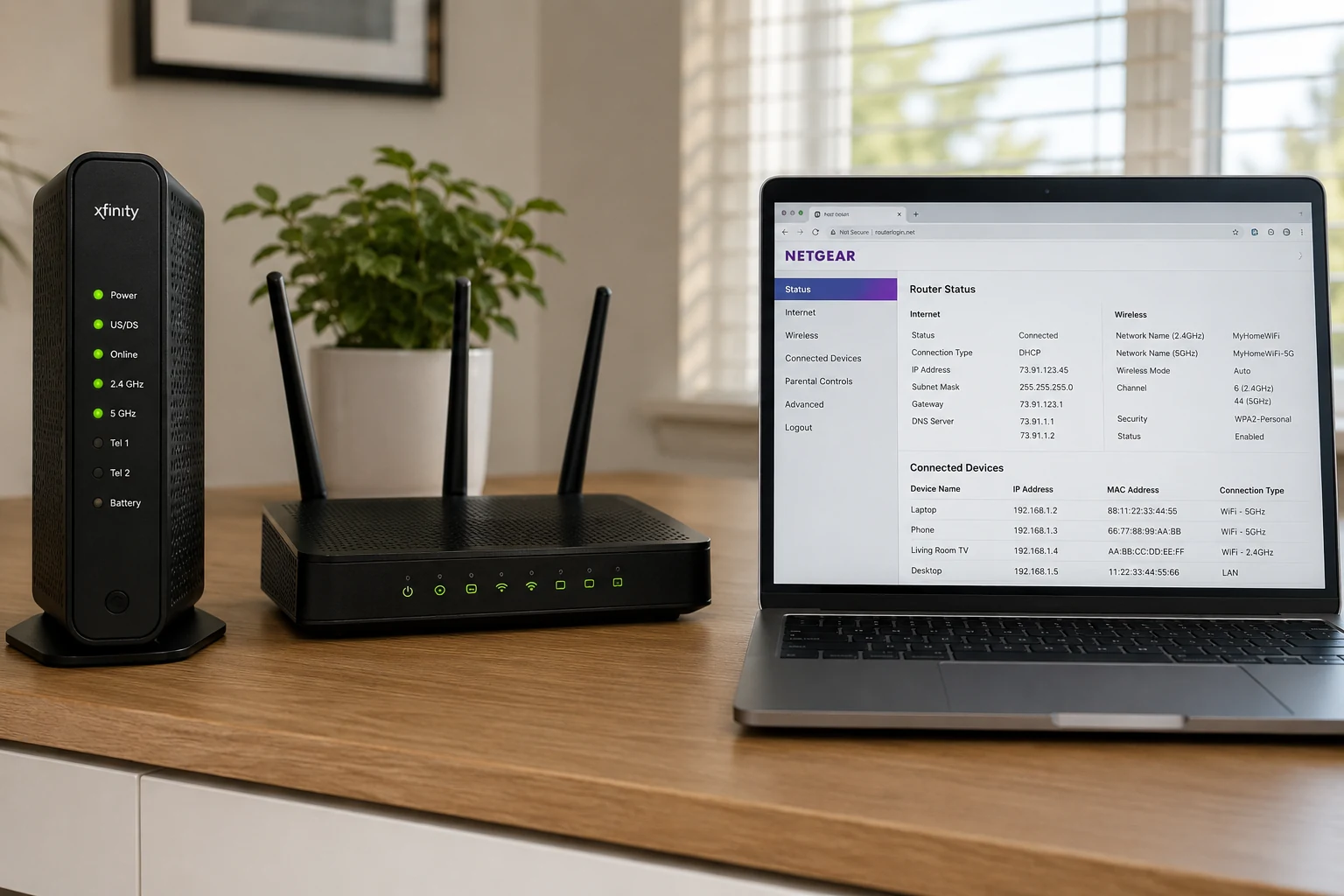
A virtual private network can easily route your traffic through a residential ISP connection, meaning an address can be both residential and VPN-routed at the same time. Understanding how these network properties overlap will change how you decide which service is actually worth your money.
Article summary and product fit
Is a residential IP the opposite of a VPN IP?
No. “Residential” describes the kind of network block an exit IP belongs to, while “VPN” describes how your traffic reached an exit address. One IP can therefore be residential, VPN-routed, static, and shared at the same time.
What matters in this article
- Why the labels get confused: websites can evaluate both location and the network classification behind an IP, so a residential exit and a data-center exit can be treated differently even in the same city.
- Why residential is not invisible: the article cites detection systems that identify residential proxy activity despite the address belonging to a consumer ISP block.
- Buying rule: pay for residential routing only when a controlled test shows that it solves a specific blocking problem. For ordinary privacy or travel, a standard VPN exit may be the simpler fit.
- Important limit: a high-trust service may still prefer your normal home connection; in that case, neither a residential proxy nor another VPN label is necessarily the right answer.
The article’s evidence includes an EFF VPN guide, Windscribe’s static-IP documentation, and residential-proxy detection material from Cloudflare and MaxMind.
Product fit: OnlydogVPN fits the article’s ordinary travel, public-Wi-Fi, and general regional-routing case when no specialized residential classification has been shown to be necessary. The article does not treat it as a substitute for a tested residential route when network classification is the actual problem.
A Residential IP Can Still Be a VPN IP
To clear up the confusion, look closely at what these terms actually measure.
A traditional home residential IP is an address assigned by a consumer internet service provider (like Comcast, Orange, or BT) to an end user's household. A VPN IP, as electronic privacy guides from organizations like the EFF explain, is simply the public exit address that destination websites see after your data has been encrypted and channeled through a provider's remote server infrastructure.
These two concepts do not cancel each other out. Providers regularly bridge the gap: commercial services like Windscribe offer static residential IPs directly inside their consumer VPN products, routing your traffic through actual residential network blocks.
Furthermore, words like "residential" are frequently misunderstood. Residential does not automatically mean dedicated. That same Windscribe residential IP, for example, is often shared among a small cluster of customers rather than locked exclusively to a single account.
An individual internet address can simultaneously be: Residential+VPN-Routed+Static+Shared Once you realize that a residential network can be accessed via a VPN tunnel, the simple "residential versus VPN" binary collapses completely.
Websites Can Care About the Network Behind the IP, Not Just the Country
If residential IPs can be accessed via a VPN, why do they exist as a distinct commercial product? Because websites don't just check what country your IP is registered in—they evaluate the network infrastructure behind it.
Advanced IP-intelligence platforms (such as MaxMind’s Anonymous IP databases) categorize public addresses into distinct buckets:
- Commercial Datacenter / Hosting Provider
- Anonymous VPN Network
- Public Proxy
- Residential Proxy
- Consumer ISP (Residential)
This means two different IP addresses geolocated to the exact same city can present entirely different profiles to a website's security filter. An ordinary VPN exit running on a commercial data-center subnet triggers an immediate flag, resulting in endless CAPTCHAs, extra multi-factor authentication steps, or streaming proxy errors. A residential exit, by contrast, matches the network signature of an ordinary home broadband connection, bypassing those automated triggers.
Residential IPs are useful because of how the exit network is classified by automated filters—not because the IP has somehow stopped being a network intermediary.
“Residential” No Longer Means “Looks Like an Ordinary Home and Cannot Be Detected”
A common temptation is to assume that paying a steep markup for a residential IP gives you a magical invisibility cloak—an address that is entirely immune to blocking or detection.
That assumption is outdated. Detection systems have evolved rapidly. Security platforms like Cloudflare and MaxMind maintain dedicated residential-proxy detection signatures. MaxMind's threat databases specifically isolate addresses being cycled through commercial residential proxy networks, associating them with specific providers even though they sit on consumer ISP blocks.
As MaxMind notes, residential proxies are harder to spot than obvious data-center IPs because they mimic legitimate home connections, but they are far from undetectable.
Don't pay extra because a marketing page implies that a residential IP means websites will never know you're using an intermediary. Pay for a residential route only if you run a controlled test (same device, same account, same website) and discover that it repeatedly solves a specific, measurable blocking problem that an ordinary VPN exit cannot clear.
For Privacy, a Shared VPN IP Can Be Better Than a More “Normal” Address
When weighing your options, remember that website acceptance and true data privacy are two entirely different objectives. A network property that makes your traffic look more "normal" to a web server can sometimes make your individual activity easier to track.
Standard, shared VPN servers (offered by providers like ExpressVPN and Proton VPN) mix the traffic of thousands of different users behind a single public exit IP address. This massive pooling effect provides a powerful privacy shield: websites see a continuous stream of traffic coming from an address, but they cannot link any specific request back to your real-world identity.
By contrast, an exclusive or static residential address prioritizes connection consistency over deep anonymity pools.
For ordinary day-to-day browsing privacy, a standard shared VPN exit offers superior mixing protection. A residential exit is a specialized tool designed primarily to overcome stubborn website friction, not a blanket upgrade to your cryptographic privacy.
Buy the Property You Need, Not the Most Expensive IP Label
When it’s time to choose a tool, match your subscription to your actual operational friction:
For ordinary browsing privacy, travel, and public Wi-Fi security: Choose a reliable, standard VPN IP. You want your public location masked, your local Wi-Fi traffic encrypted, and your setup kept simple. There is no reason to pay a premium for a residential category unless you've proven that standard exits are being blocked. If you want a fast, zero-friction experience for general travel and streaming, a streamlined utility like OnlydogVPN↗ provides automated routing and reliable regional nodes that handle everyday privacy seamlessly without requiring specialized IP classifications.
When network classification is a proven barrier: If standard VPN exits repeatedly fail a specific, vital task (like managing a sensitive account or bypassing strict corporate firewalls), and a residential route consistently clears it, then invest in a provider that explicitly supports residential infrastructure (such as Windscribe).
When you need high-trust direct access: Sometimes the best tool isn't a VPN at all. If a high-trust service (like a corporate portal or banking dashboard) fundamentally expects your normal home broadband connection, dropping your tunnel temporarily is cleaner than buying an expensive proxy network.
Before buying, ask yourself four simple questions: Who owns the exit network? Who else uses the IP? Does the address change? How did my traffic reach it?
Answer those accurately, and you'll buy the exact network properties you need—without paying for marketing labels you don't.
Frequently Asked Questions
Can a residential IP also be a VPN IP?
Yes. The article explains that the terms describe different properties: “residential” describes the exit network, while “VPN” describes the route your traffic took to reach that exit.
Why can two IP addresses in the same city be treated differently by a website?
Because websites can consider the network behind the address, not just the country or city. A data-center VPN exit, a public proxy, and a consumer ISP address can receive different classifications and risk signals.
Does paying for a residential IP make VPN or proxy use undetectable?
No. The article cites Cloudflare and MaxMind material showing that residential-proxy activity can still be detected and classified. Residential addressing may reduce some forms of friction, but it is not an invisibility guarantee.
When is a residential route worth paying for?
Only when a controlled, repeatable test shows that a standard VPN exit fails a specific task and a residential route consistently fixes that problem. Otherwise, the article recommends buying the simpler network property you actually need.