When Australia’s social media minimum age came into effect on 10 December 2025, headlines around the world announced a clean break: Australia had banned social media for everyone under 16. The mental image was immediate and absolute—apps vanishing from teenagers’ home screens, digital gates slamming shut across the country, and social feeds going permanently dark for high schoolers.
Yet three months after the law took effect, research published by the eSafety Commissioner revealed an apparent paradox. More than four in five Australian children aged 10 to 15 were still using at least one age-restricted platform.
The immediate reaction from critics was to claim the policy had failed, while defenders insisted compliance was merely ramping up. Both takes missed the actual reality. Australia did not pass a law that blocks teenagers from seeing the social internet. Instead, it introduced a statutory obligation focused strictly on account eligibility.
Understanding that difference is essential. It explains why teenagers can still browse public content, why messaging apps remain untouched, why adults occasionally get slapped with age checks, and why reaching for a VPN will not magically alter anyone’s eligibility.
Article summary and product fit
Did Australia ban social media for everyone under 16?
No. The framework is an account-eligibility rule for covered social-media platforms, not an ISP-level block on the social internet. Covered providers must take reasonable steps to stop Australian residents under 16 from creating or keeping accounts, while public content and excluded service categories can still remain available.
Key takeaways
- Best for: Parents, teenagers, and adults trying to understand what the 2026 account rules actually do when an age prompt or account restriction appears.
- Key point: The obligation sits on covered platform providers, and age assurance can combine several signals rather than forcing every user into a single government-ID method.
- Product fit: For eligible users, the article positions OnlydogVPN as a connection-security tool for ordinary network privacy, not as a way to alter age or residency eligibility under the rules.
- Important limit: Changing a public IP address does not change date of birth, account history, mobile number, app-store region, or the other signals platforms can use for age and residency assessment.
Source context: eSafety three-month evaluation, eSafety platform assessment framework, OAIC social media minimum-age guidance, and OnlydogVPN official website.
The Rule Is About Accounts, Not the Entire Social Internet
The single biggest misconception about Australia’s framework is that it operates like a digital border wall. It does not.
Under Part 4A of the Online Safety Act, covered platforms must take reasonable steps to prevent Australian residents under 16 from creating or keeping accounts. That design carries very specific practical implications:
- The burden sits squarely on the company: The legal duty rests with the platform provider, not the individual. Teenagers and their parents face no civil or criminal penalties if an account slips through.
- Public content remains accessible: Because the obligation targets account ownership, public-facing material that does not require a login—such as an open web link to a public forum thread or an embedded video—can still be viewed where the service allows it.
- Existing accounts face deactivation, not network blocks: An under-16 user does not find the entire service blocked at an ISP level. Instead, their personal profile is locked, logged out, or deactivated.
- Connected life continues elsewhere: Messaging, online gaming, educational platforms, and digital health tools were never made illegal for teenagers.
Calling the policy a “ban” is convenient shorthand, but it creates the false impression that apps were supposed to stop launching overnight. The law is an account restriction—a statutory delay on entering the signed-in architecture of specific social platforms.
Which Platforms Are Actually Covered in 2026?
Rather than trying to police every website that allows user comments, Australian regulations target platforms built around specific engagement mechanics.
Under the current assessment framework updated in early 2026, a service generally qualifies if it facilitates significant social interaction while deploying features like algorithmic recommenders, infinite feeds, engagement metrics, or ephemeral content. At the same time, services whose primary purpose is direct communication, gaming, education, health, or professional networking are excluded.
| Platform Category | Services Currently Assessed as Covered | Prominent Excluded Services | | Status in 2026 | Facebook, Instagram, Kick, Reddit, Snapchat, Threads, TikTok, Twitch, X, YouTube | Discord, GitHub, Google Classroom, LEGO Play, Messenger, Pinterest, Roblox, Steam / Steam Chat, WhatsApp, YouTube Kids |
Do not treat this breakdown as an unchangeable roster. Regulatory status tracks actual product design. If an excluded platform redesigns its interface to push algorithmic public feeds, or if an age-restricted platform strips out those mechanics, its classification under the rules can shift. Rather than memorizing a static checklist, the useful rule of thumb is function: direct utility and messaging generally sit outside the scope, while algorithmic discovery and feed-based engagement trigger the rules.
An Age Check Is Not Necessarily an ID Check
Because the law targets under-16s, many adults assume they will never encounter it. When a 28-year-old suddenly sees a prompt requiring age confirmation, confusion usually follows: Why do I have to prove my age when I’m clearly an adult?
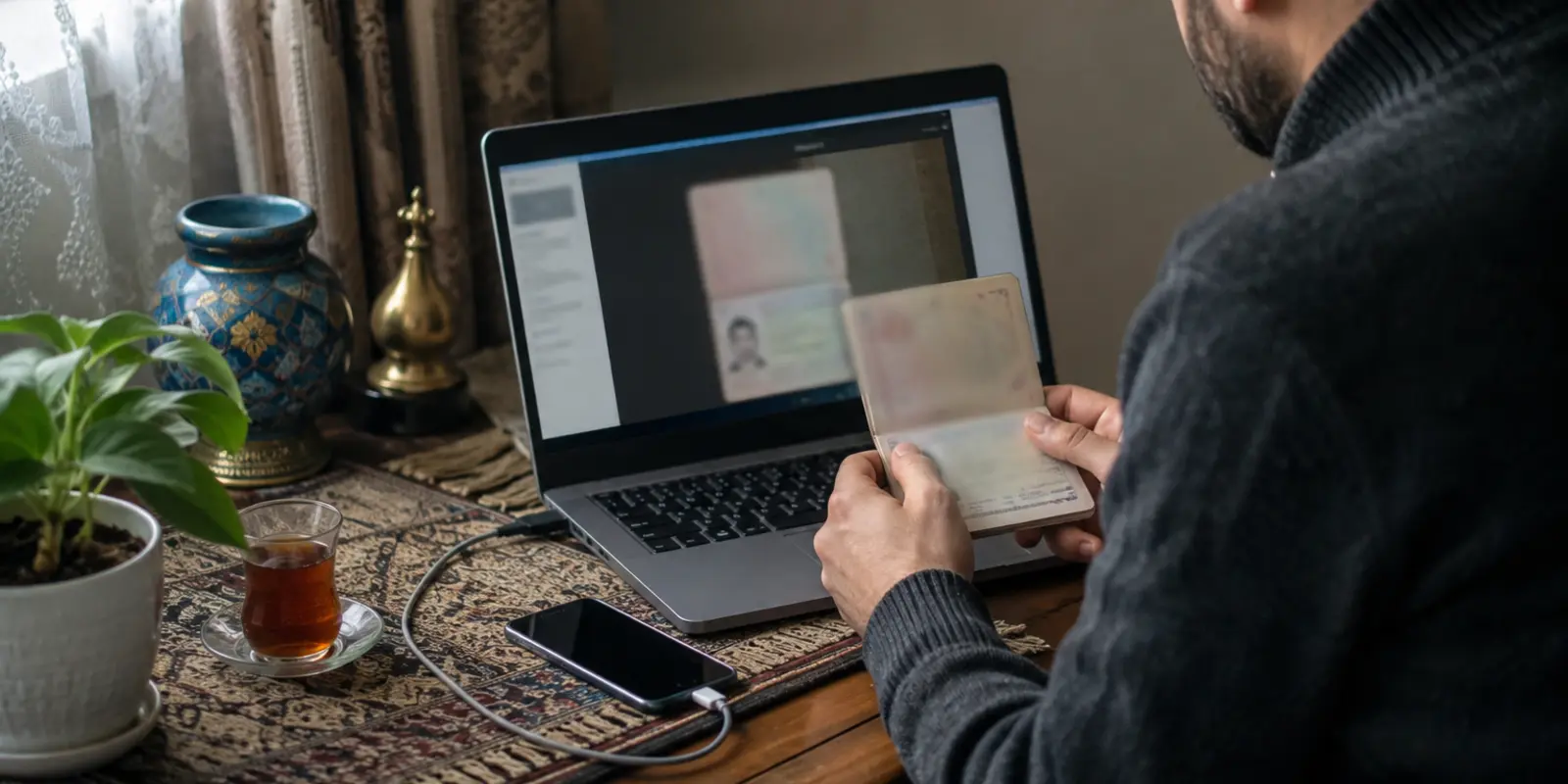
Platforms do not possess a magical window into a user’s birth certificate. Under regulatory guidance from the Office of the Australian Information Commissioner (OAIC), platforms deploy a layered approach known as age assurance. Rather than demanding government documents from every user on day one, services rely on a combination of signals:
- Inference and Estimation: Platforms assess account tenure, self-declared birthdates, behavioral patterns, or quick facial age-estimation tools (such as an analyzed video selfie that estimates an age bracket and discards the image immediately).
- Residency Verification: Because the law applies only to Australian residents, platforms also check whether an account belongs to Australia using combined signals—including mobile prefixes, device locales, Wi-Fi or GPS indicators, app-store region settings, and public IP addresses.
- Direct Verification: When automated signals remain ambiguous or flag an account as potentially underage, platforms request explicit confirmation.
Crucially, Australian law prohibits platforms from forcing users into a single government-ID funnel. A service cannot demand a driver's licence or passport as the only acceptable verification route; it must provide reasonable, privacy-preserving alternatives. Furthermore, personal information gathered strictly for age assurance is legally ring-fenced, barring platforms from repurposing that data for targeted advertising and requiring its prompt deletion once verification concludes.
Passing an age check once is also not a permanent guarantee. If an account’s activity later mirrors that of a minor, the platform may prompt for re-verification. Conversely, if an adult is wrongly flagged or locked out, platforms are legally required to provide a clear human appeal mechanism.
The First Results Show Why “Ban” Is the Wrong Mental Model
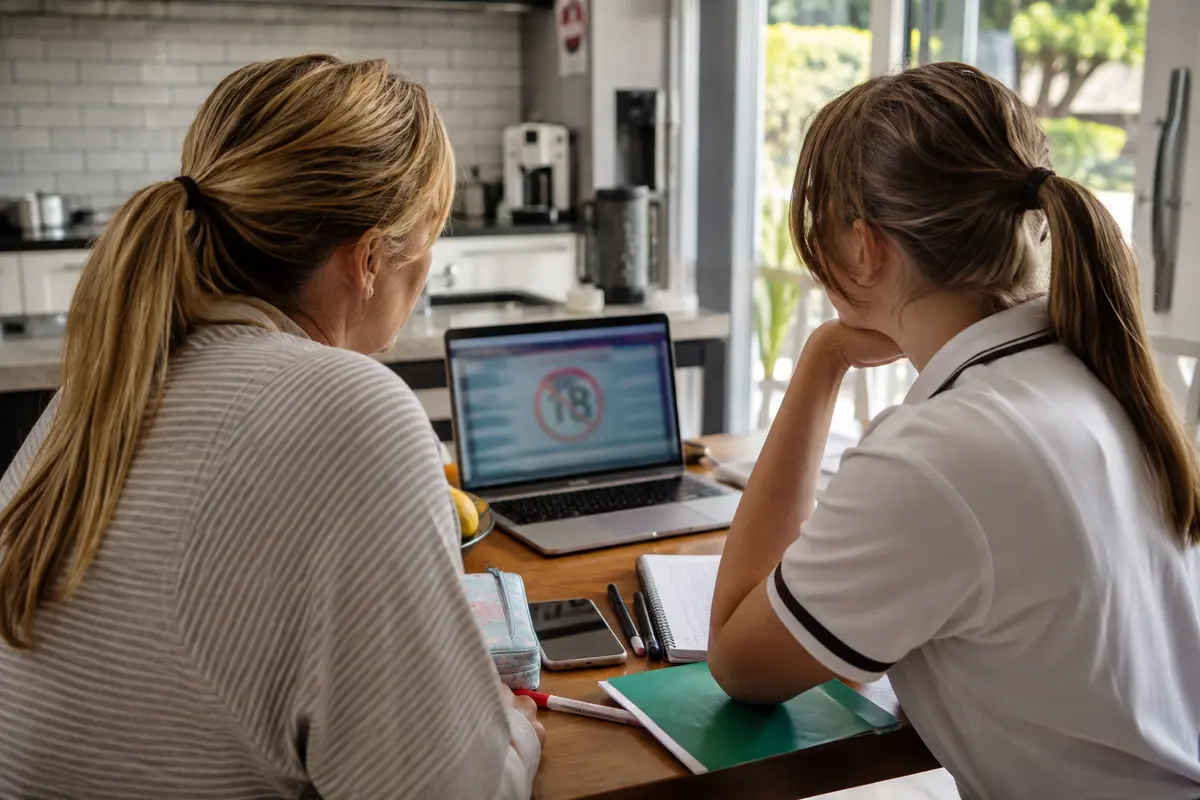
The gap between paper regulations and online reality became clear in July 2026, when the eSafety Commissioner released its comprehensive three-month evaluation of the rollout.
The headline findings demonstrated exactly why focusing on accounts rather than access paints the true picture:
- The proportion of Australians aged 10 to 15 who held an account on at least one restricted platform dropped noticeably, falling from 52.4% to 42.1%.
- The proportion of those same teenagers who reported any use of an age-restricted platform barely budged, dipping slightly from 85.9% to 81.5%.
The numbers reflect the structure of the law. Teens without accounts can still click links sent by friends, watch clips embedded across the open web, or view content on shared family screens. Furthermore, when surveyed about how they maintained access, the vast majority of teenagers with active accounts did not cite sophisticated hacking or paid circumvention. The most common answer was mundane: the platform simply had not asked them to verify yet.
Reported technical workarounds, including VPN usage, were comparatively rare among younger teens.
This leads to two vital takeaways. First, the law was never designed to eliminate every passive encounter with social media content. Second, parents cannot treat legislation as an automated nanny. The eSafety report uncovered a concerning side effect: following the launch of the rules, parental awareness of their children's actual online activity declined in several surveyed groups. Assuming an algorithm has handled everything is the quickest way to lose track of what your household is doing online.
What to Do Depends on Your Age — Not Your Location
Sorting out your next move comes down to who you are and what the screen in front of you is asking.
For Teenagers Under 16
If your account on a restricted platform gets deactivated, that is the law working as written. Do not fall for online scams offering “pre-verified” burner accounts or shady age-bypass tools; these services are primary vectors for credential theft, malware, and sextortion. Use account settings to export your media, archives, and contacts before access lapses, and rely on allowed direct-messaging services to keep in touch with friends.
For Adults and Legitimate 16+ Users
If an age prompt hits your feed, don’t panic:
- Review your options: Check the verification methods offered. If you are uncomfortable uploading identity documents, look for alternative routes such as facial estimation or trusted third-party confirmation.
- Use the appeals path: If an automated filter incorrectly restricts your account, lodge a formal dispute through the platform’s designated review workflow.
- Escalate privacy concerns: If you suspect an age-assurance provider is mishandling your verification data, submit a complaint directly to the platform’s privacy team. If the response is inadequate, you can escalate the matter to the OAIC.
For Parents
Forget the out-of-date infographics circulating on social feeds. Check whether the specific apps your family uses are classified as age-restricted, focus conversations on how your children spend their screen time, and maintain open channels about digital safety.
The VPN Reality Check
Inevitably, the conversation around digital age limits turns to Virtual Private Networks. If Australia restricted accounts, shouldn't switching your IP address to a foreign server solve the problem?
In short: no.
A VPN changes the public IP address your connection presents to the web. It does not alter your date of birth, wipe your account’s historical metadata, change your mobile phone number, or reset your app store region. Because platforms determine residency through a mosaic of signals—and verify age through an entirely separate workflow—toggling a VPN country cannot make an underage user eligible.
That distinction matters because it separates what a VPN actually does from what people hope it will do.
For legitimate, eligible users, a reliable VPN remains an indispensable tool for online security. Encrypting traffic on shared household Wi-Fi, securing mobile data in transit, or stabilizing routes across congested networks are real-world needs.
This is where a purpose-built tool like OnlydogVPN fits naturally into an everyday setup. Rather than forcing you to micromanage manual configuration profiles or puzzle over obscure server protocols, OnlydogVPN streamlines connection security with intelligent, one-tap routing. You tap once, and the app automatically establishes a fast, protected tunnel that safeguards your personal traffic against local snooping on public or mixed networks.
It delivers genuine peace of mind where it counts—protecting your underlying connection, rather than pretending to be a magic wand for regulatory compliance.
Before asking how to bypass Australia’s social media framework, start with two far simpler questions: Is this platform currently classified as age-restricted, and is the person using it legally eligible to hold an account? Once those two facts are clear, the path forward is straightforward.
Frequently Asked Questions
Did Australia completely ban social media for people under 16?
No. The article explains that the law targets account creation and retention on covered platforms rather than blocking the entire service at the network level.
Who has the legal duty under the under-16 account rules?
The duty sits with covered platform providers, which must take reasonable steps to prevent Australian residents under 16 from creating or keeping restricted accounts.
Are all messaging, gaming, and social apps covered?
No. The framework distinguishes covered social-media services from categories such as direct communication, gaming, education, health, and other excluded uses, and classifications can change as products change.
Does age assurance always mean uploading government ID?
No. The article describes layered age assurance and notes that platforms cannot force a single government-ID-only route; reasonable privacy-preserving alternatives must be available.
Can a VPN make an under-16 user eligible for a restricted account?
No. A VPN changes the public IP address, but it does not change age, account history, phone number, app-store region, or the broader set of signals used for eligibility and residency checks.