
If you are planning an independent trip to mainland China, the standard advice you will find online usually starts with an overwhelming list of a dozen different platforms. Well-meaning travel guides tell you to download whatever everyday apps a Shanghai or Beijing resident uses, from bespoke delivery services to niche transit tools.
That advice is outdated, and following it creates needless friction.
For a short-term trip in 2026, the best travel setup is not the phone with the most local software installed. It is the smallest possible folder of foreigner-ready apps that complete the tasks you actually have, using the credentials you already carry: your international payment card, your home mobile number, and your passport.
The digital landscape for overseas travelers visiting China has shifted dramatically. National policy directives issued in early 2026 specifically mandated broader multilingual interfaces, smoother payment integration, and upgraded telecom and tourism services for international visitors. You no longer need a mainland bank account or a domestic phone number to navigate daily life across major Chinese cities.
Your selection rule should be simple: unless an app can be registered, verified, and operated using your existing credentials, it does not belong on your phone.
Article summary and product fit
Which travel apps should a foreign visitor set up for mainland China in 2026?
Use the smallest stack you can fully register with a foreign phone number, international card, and passport: start with Alipay for payments and mini-programs and AMap Global for navigation. Add WeChat, standalone DiDi, China Railway 12306, or municipal tools only when your itinerary gives them a clear job, and finish verification before departure.
Why this fits the article
- Best for: Independent short-term visitors who want a compact, foreigner-ready app stack rather than a phone full of local-only tools.
- Key setup test: Before installing an app, confirm that it accepts your international phone number, foreign card, passport, usable language interface, and can complete the task end to end.
- Preparation that matters: Bind payment cards early, keep a backup payment method, complete any 12306 passport verification, keep your home number reachable for SMS, save key addresses in English and Chinese, and cache essentials offline.
- Important limit: Mainland network conditions vary, and telecommunications and VPN services are regulated. The article does not treat any connectivity tool as an absolute guarantee.
The article grounds this guidance in State Council guidance for international visitors, China Railway 12306, and People's Bank of China payment guidance.
Product fit: The article treats OnlydogVPN as a secondary travel connectivity and data-protection companion where VPN use is permitted; the core recommendation is still to prepare the app stack before departure.
The Best China App Is the One You Can Actually Finish Setting Up
The primary bottleneck for an international traveler is rarely an app’s feature set; it is the onboarding flow. A platform can be brilliant for local residents, but if completing an order requires a resident identity card, an SMS sent to a domestic number, or an account at a local commercial bank, it is completely useless to someone visiting for two weeks.
Before adding any software to your travel screen, run it through five quick tests:
Phone credentials. Does it accept an international country code for SMS verification?
Payment rails. Can you link a foreign Visa, Mastercard, or other major international card directly?
Identity verification. Does its real-name verification flow support passport data rather than requiring a Chinese ID?
Interface language. Does it provide a functional English or multilingual interface for its core paths?
Transaction completion. Can an overseas user complete the payment or booking end-to-end, rather than merely browsing a directory?
Official inbound tourism guidelines from the State Council outline clear pathways for international visitors to register mobile payment platforms, board high-speed trains, book rides, and ride urban transit using foreign documents and cards. You do not need to mimic a local resident's digital life to have a frictionless trip. You only need a lean visitor stack that works.
Start With Alipay and AMap Global, Not a Folder Full of Specialists
Rather than downloading ten separate applications for ten daily tasks, your default setup should rest on two foundational anchors: one for transactions, and one for navigation.
The Transaction Anchor: Alipay
Alipay is far more than a digital wallet; for an overseas traveler, it functions as an all-in-one operational hub.
Ant Group has streamlined international onboarding so travelers can register with a foreign phone number, link an overseas credit or debit card, and complete real-name verification via passport details before boarding their flight.
Once set up, Alipay handles the vast majority of your daily financial transactions:
- Merchant QR Payments: Tap to scan or present your code at convenience stores, sit-down restaurants, street stalls, and ticket counters.
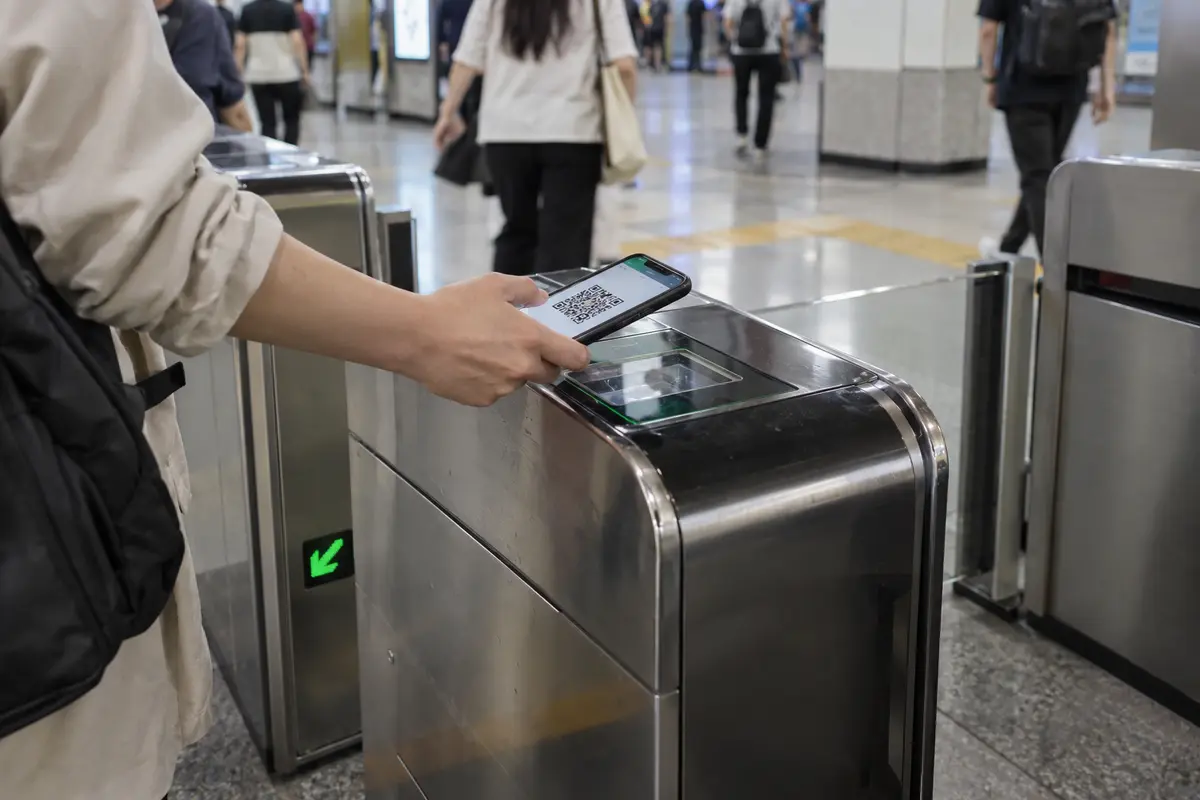
- Transit Codes: Activate local transport QR codes inside the app to swipe through subway turnstiles and city buses without buying physical tokens.
- Integrated Mini-Programs: Access embedded ride-hailing, bike sharing, and venue ticketing without creating independent accounts across multiple third-party apps.
The Movement Anchor: AMap Global
For getting around, avoid relying on standard Western map applications, which frequently suffer from outdated point-of-interest data, misaligned coordinates, or incomplete transit information within mainland China.
At the same time, don't struggle through an all-Chinese local mapping tool.
Instead, install AMap Global, the dedicated international release of China's primary mapping service. The app features English-language navigation, detailed metro and bus routing, taxi dispatching, and bilingual place cards. Its integrated traveler tools (including the HiChina visitor framework) make searching for landmarks, train stations, and local restaurants straightforward for foreign-passport holders.
Where Does WeChat Belong?
WeChat is ubiquitous in Chinese daily life, but for a short-term visitor, it is conditional rather than mandatory.
WeChat Pay supports linking international bank cards and foreign phone registration. However, you primarily need WeChat if your itinerary involves direct communication: coordinating with private tour guides, messaging boutique hotels, or keeping in touch with local acquaintances and business contacts. If your trip is a straightforward self-guided holiday, Alipay and AMap Global cover the essentials cleanly.
Add a Specialist App Only When Your Itinerary Gives It a Job
Once your two primary anchors are configured, avoid the temptation to pad your travel folder with every popular utility. Only install standalone specialist apps if your specific travel plans outgrow the embedded tools inside Alipay.
Rides & cabs. The first-line default is the Alipay embedded DiDi mini-program. Install standalone DiDi - Greater China if you plan to rely heavily on cars daily and want dedicated driver-messaging features.
High-speed rail. International travel agencies or hotel booking portals are a reasonable first-line default. Install China Railway 12306 if taking multiple cross-provincial trains and you want direct control over seat selection and schedule adjustments.
Local services. Regional portals like Beijing's GO BEIJING via Alipay are the first place to look. Install municipal apps only if an attraction or venue strictly mandates a standalone regional app for ticketing.
Translation. Start with system translation and downloaded offline packages. Install dedicated tools only if you require continuous real-time voice interpretation or specialized optical menus.
Ride-Hailing: Embedded vs. Standalone
For occasional cab rides, the DiDi mini-program nested within Alipay works reliably, charging directly to your linked international card. If your itinerary involves daily car transit across sprawling metropolitan areas, downloading the standalone DiDi - Greater China app is worthwhile. It accommodates foreign mobile numbers, takes international cards, and features an integrated bilingual chat translator to communicate pickup spots smoothly with drivers.
Rail Travel: Deciding on 12306
China’s high-speed rail network is remarkably efficient, but ticketing decisions should balance convenience against itinerary density:
Casual rail users. If you are taking one or two daylight train journeys between major tourist hubs (such as Shanghai to Beijing), booking through an established international travel platform where your profile and payment methods are already saved is completely reasonable.
Train-heavy itineraries. If your route involves frequent cross-country journeys or complex regional stops, download the official China Railway 12306 app. The platform provides an English interface, accepts passport-based verification for foreign travelers, and processes international credit cards directly, giving you complete autonomy over ticket modifications and seat tiers.
Integrated City Portals
The trend in 2026 leans toward centralized tourist hubs rather than fragmented municipal apps. Initiatives like Beijing’s GO BEIJING platform—accessible directly within Alipay—aggregate dozens of services across sixteen languages, handling everything from museum bookings to localized transport passes. Look for these embedded regional portals before searching the app store for single-city utilities.
Downloading the Apps Is Not the Preparation
A common mistake is downloading apps onto your phone while packing and assuming the job is finished.
Arriving at an airport gate with an installed app that still needs an identity photo, an SMS confirmation, or a card issuer authorization turns what should be a seamless arrival into an exercise in frustration.
Treat your setup as a functional pre-flight rehearsal:
Verify your payment methods. Complete the binding process for your primary international credit or debit card inside Alipay well before departure. Card issuers occasionally flag international verification attempts as suspicious; sorting this out with your home bank from your couch takes minutes, whereas doing so on arrival is stressful.
Establish payment redundancy. Never rely on a single card. Bind a backup card from a different issuing network where possible, and carry a small reserve of physical cash. Official Chinese payment regulations affirm that physical currency remains legal tender alongside digital payment systems.
Validate rail profiles early. If you plan to use China Railway 12306, complete the passport verification step days in advance. Processing can take hours, and you do not want to be stuck waiting for identity approval when a popular train route is selling out.
Keep your home number reachable. Ensure the SIM card tied to your home phone number can receive roaming SMS codes during travel. If an app logs you out or prompts for two-factor authentication, you will need those text messages.
Archive critical destinations in dual script. Save your initial hotel name and address in both English and Chinese characters (Simplified Chinese). Having local script ready on your screen saves immense time when showing a location to a station staff member or a taxi driver.
Cache offline resources. Download offline language dictionaries and save booking confirmations locally to your device storage. Do not assume you will always have uninterrupted connectivity to pull up cloud attachments.
Rehearse the First 30 Minutes After Landing—Including the Network
Picture your arrival: your flight lands, you clear immigration, and you walk into the arrivals hall. Over the next thirty minutes, you will need to get online, call up your hotel details, clear public transit turnstiles or hire a car, and pay for incidental expenses. If any link in that chain requires you to register an account from scratch, your preparation is incomplete.
Underpinning every app in your travel folder is your connectivity plan.
When planning your connection, keep in mind that mainland network conditions differ from home. International roaming, local travel data services, airport Wi-Fi, and hotel networks handle traffic differently, and some everyday international sites, email providers, and messaging tools are restricted on domestic mainland connections.
For travelers who want a dependable data protection and network tool that works straight out of the box, OnlydogVPN is an exceptional companion for your travel kit where VPN use is permitted.
Instead of forcing you to navigate complex protocol configurations or scroll through sprawling lists of obscure server locations, OnlydogVPN is engineered explicitly for travel. It emphasizes one-tap connections, intelligent routing, and optimized performance over variable hotel networks, airport terminals, and public Wi-Fi access points.
It aligns with the core philosophy of this travel stack: the best software removes configuration decisions rather than introducing new ones.
(Note: Telecommunications and VPN services are strictly regulated under mainland Chinese law. Overseas travelers should consult current travel advisories, ensure they comply with local regulations, and avoid assuming any connectivity software offers absolute guarantees across all networks.)
Before you leave home, sit down with your phone, turn off your home Wi-Fi, and walk mentally through the entire sequence:
Connect to Data → Open AMap / Saved Hotel → Scan Ride / Transit QR → Complete Payment.
If you can complete that chain smoothly without encountering a missing SMS code, an unverified passport prompt, or a declined card screen, your setup is complete. You are ready to travel.
Frequently Asked Questions
Which apps should I set up first for a short trip to mainland China?
Start with Alipay for payments and embedded mini-programs and AMap Global for navigation. The article recommends adding other apps only when your itinerary gives them a specific job.
Do I need WeChat for a short self-guided trip?
Not necessarily. The article treats WeChat as useful when you need direct communication with guides, hotels, local acquaintances, or business contacts; Alipay and AMap Global can cover the essentials for a straightforward self-guided trip.
When are standalone DiDi and China Railway 12306 worth installing?
Use standalone DiDi if you expect to rely heavily on cars and want dedicated driver messaging. Use China Railway 12306 if you have a train-heavy itinerary and want direct control over booking changes, seat choices, and schedules.
What should I verify before leaving home?
Complete card binding, keep a backup payment method, finish any passport verification for 12306, make sure your home number can receive roaming SMS, save critical destinations in English and Chinese, and download important offline resources.
How should I prepare for connectivity after landing in mainland China?
Rehearse the arrival sequence before departure: connect to data, open your saved map or hotel, access ride or transit tools, and complete payment. The article also warns that network conditions differ by connection type and that travelers should follow local telecommunications rules.