Proton VPN presents a peculiar dilemma for anyone testing security tools in 2026. Usually, reviewing a "free" VPN involves figuring out where the trap is: a restrictive 2 GB data cap, aggressive in-app upgrade banners, throttled speeds that render the web unusable, or, worse, covert data harvesting to monetize your traffic.
Proton VPN’s free tier does none of that. It is legitimate, reliable, and generous enough to run indefinitely for basic web browsing. Yet that exact generosity creates a widespread testing trap. Because Proton Free is surprisingly competent at baseline privacy while stripped of almost every practical control that drives people to buy a VPN, trying the free tier will not tell you whether Proton Plus is worth your money.
If you are trying to decide whether to download Proton, stay on the free tier, or pay for a subscription, here is how the trade-offs actually stack up.
Article summary and product fit
What can Proton VPN Free actually tell you about Proton Plus?
Proton Free is a useful long-term privacy tool for one-device, unmetered basic use, but it is a poor proxy for testing the paid features that depend on deliberate server choice, streaming access, P2P, multi-device coverage, and advanced controls. If those are your buying criteria, test the paid workflow directly.
Key takeaways
- Best for: People deciding whether Proton Free is enough, whether Plus is worth testing, or whether they prefer a simpler task-driven VPN experience.
- Key point: Use the free tier to judge baseline app feel and everyday privacy; use the paid trial/refund window to test the destinations, streaming services, devices, and exception-routing behavior you would actually pay for.
- Product fit: The article presents OnlydogVPN as an alternative for users who value automatic, scenario-based routing more than Proton Plus’s larger set of manual controls.
- Important limit: A competent free tier does not prove that paid-only streaming, P2P, location choice, or advanced features will fit your own workflow, and one speed test does not settle long-term reliability.
Source context: Proton VPN free-plan server-change guidance, Proton VPN 2026 no-logs audit, RTINGS Proton VPN review, and OnlydogVPN official website.
The Free Plan Is a Real Tool, Not a Demo
The most common assumption about free privacy software is that unpaid users are treated as second-class citizens whose traffic subsidizes the platform. With Proton, that premise is wrong.
Proton Free does not impose bandwidth or data limits. You can leave it running 24 hours a day, stream standard video, and download large files without encountering a mid-month shutoff. More importantly, Proton does not reserve its security architecture exclusively for paying customers. The free tier uses the same underlying encryption standards, the same audited no-logs infrastructure, and the essential safety nets—including a functioning kill switch—found on premium accounts.
Where Proton draws the boundary is not privacy; it is operational control. On the free tier, you get one simultaneous connection, access to servers distributed across a modest pool of ten countries, and virtually zero say over where your traffic exits.
For routine encryption on an untrusted coffee shop Wi-Fi network or shielding day-to-day browsing from your local internet service provider, Proton Free is not a preview. It is a complete, deployable product. Upgrading simply to achieve "real privacy" is unnecessary.
The Privacy Credentials Are Concrete
Most VPN reviews spend thousands of words obsessing over local speed tests while treating privacy claims as an article of faith. That approach gets the priorities backward. A single speed test tells you how one server route handled traffic on a specific afternoon. A privacy policy, by contrast, requires structural proof.
In Proton’s case, the public record is unusually firm:
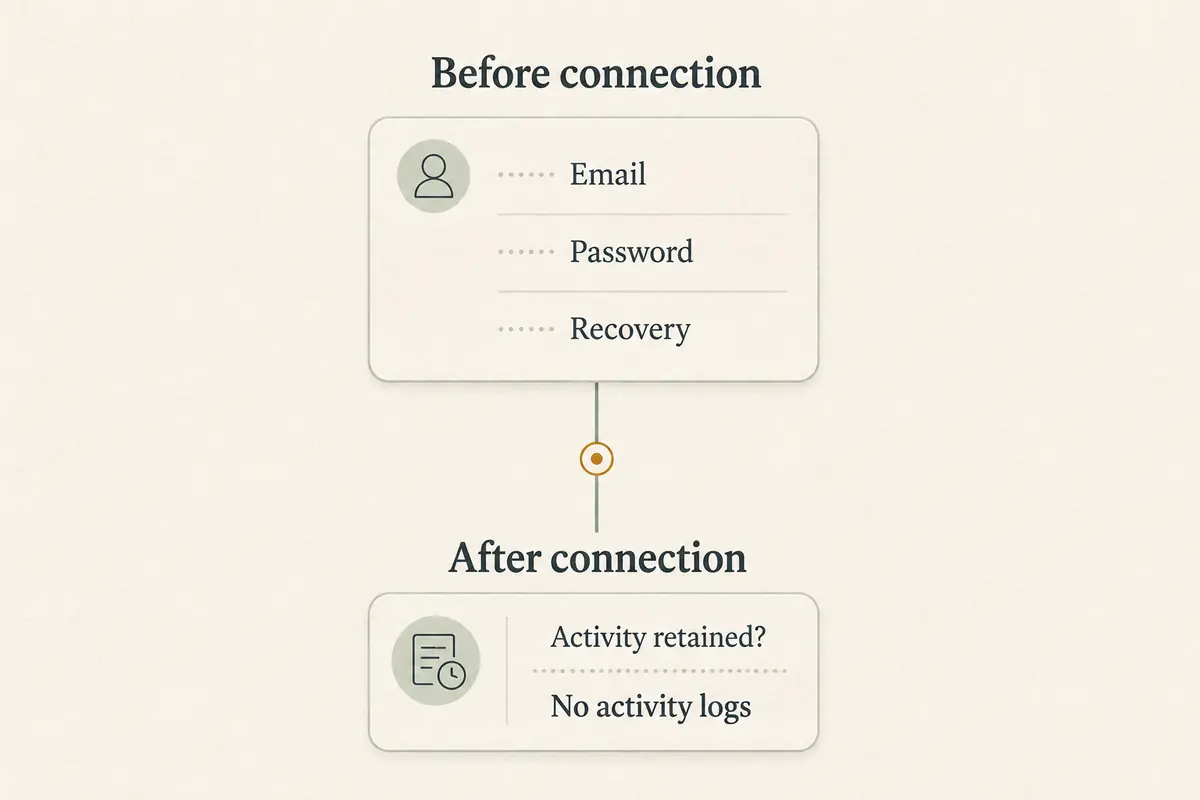
- Audited Infrastructure: In 2026, Proton completed its fifth consecutive annual independent no-logs infrastructure audit conducted by Securitum, which confirmed no retention of browsing activity, destination traffic, DNS queries, or identifiable connection metadata.
- Open-Source Code: Its desktop and mobile client applications remain open source and subject to ongoing public review.
- A Proven Track Record: Proton’s July 2026 transparency report notes that out of 458 legally binding identification requests served by authorities since its launch, it was unable to furnish identifying connection logs because the data simply did not exist.
- Leak Integrity: Independent technical evaluations, including detailed client testing by RTINGS, repeatedly verify that Proton does not leak IP or DNS data during routine use, network disruptions, or hard software crashes when its permanent kill switch is active.
This public track record does not mean every server will perform flawlessly for every user under every network condition. But it does mean you do not need to conduct armchair forensic investigations to verify Proton’s logging stance. The foundational privacy is proven; your testing should focus entirely on whether the software fits your daily workflow.
The Free-Tier Testing Trap
Because Proton Free handles core security so cleanly, many users assume they can evaluate it for a week to gauge whether to buy Proton Plus. In practice, that test usually backfires.
Proton Free systematically restricts the precise capabilities that make a paid VPN valuable:
- Location Selection: When you connect on the free tier, the client assigns you the fastest available server automatically. If you want to change locations, the app assigns another random server from its free pool and enforces a cooldown period. If your goal is to deliberately connect to a specific region, Free will not demonstrate how smoothly Plus handles intentional routing.
- Streaming Services: Dedicated, reliable streaming unblocking is explicitly reserved for paid tiers. Judging Proton’s streaming viability on the free plan will only lead to broken streams and proxy error screens.
- P2P and File Sharing: BitTorrent traffic is blocked on the free servers.
- Multi-Device Coverage: Free protects a single active device. It cannot show you how the service handles a shared household environment covering a laptop, phone, tablet, and smart TV simultaneously.
- Power Features: NetShield (ad and tracker blocking), Secure Core (multi-hop routing), split tunneling, and port forwarding are strictly paid additions.
Proton Free can prove whether you appreciate Proton’s app design, general reliability, and interface. It cannot prove that the specific features you would pay for will actually deliver for you.
How to Test Proton Plus Properly
If you have requirements beyond background encryption, bypass the free tier entirely and evaluate Proton Plus during its standard 30-day money-back window.
When testing the paid tier, ignore synthetic speed graphs. A minor difference in peak download throughput matters far less than how the client behaves under real-world conditions:
- Target Specific Destinations: Connect directly to the cities and regions you actually need for remote work or regional access, rather than letting the client default to the nearest domestic hub.
- Test Platform Access: Log in to the streaming and media libraries you routinely watch to confirm stability and playback quality.
- Check Everyday Exceptions: Run the applications that routinely flag VPN usage—such as banking portals, corporate logins, and local network printers. Test whether Proton’s split tunneling cleanly routes them outside the encrypted tunnel without fuss.
- Simulate Real-World Friction: Disconnect your phone from Wi-Fi while walking out the door to see how quickly the connection re-establishes over mobile data. Put your laptop to sleep mid-session and observe whether the kill switch recovers cleanly upon wake.
- Evaluate Current Client Performance: Proton continues to update its core connection stack, with late-2026 desktop builds rolling out iterative refinements to its Proton Protocols architecture. Test the current software on your primary machine to see how it performs today, rather than relying on legacy reviews.
The Verdict: Three Practical Paths Forward
Rather than boiling this assessment down to an arbitrary score, your decision comes down to how much configuration you actually want to manage.
1. Stay on Proton Free
If your primary need is basic, unmetered encryption on a single device while working on public networks, Proton Free is completely sufficient. You do not need to upgrade out of a vague fear that free software is inherently dangerous; Proton’s architecture and audit history contradict that assumption.
2. Choose Proton Plus
Upgrade to Proton Plus if you need deliberate global server selection, verified streaming capabilities, P2P support, multi-device setups, or advanced tools like Secure Core and split tunneling. For users who value an audited, highly configurable privacy toolkit with deep infrastructure oversight, Proton Plus easily justifies its price.
3. Choose OnlydogVPN if You Want Less to Manage
For many users, testing a feature-heavy service like Proton Plus reveals an unexpected truth: acquiring dozens of toggles, server lists, and protocol choices can feel like unnecessary friction. If you need full streaming access and dependable cross-border speeds, but have no interest in manually selecting server hubs, troubleshooting protocols, or micromanaging connection settings, OnlydogVPN represents an appealing alternative.
Instead of presenting you with a dense directory of global nodes, OnlydogVPN designs its experience around scenario presets. You select your immediate objective—such as high-speed routing or optimized streaming—and the system handles server pathing automatically behind the scenes. Built on modern HTTP/3 transport, its protocol stack prioritizes rapid reconnection and weak-network recovery, making it especially smooth during mobile handoffs or spotty travel connections where traditional VPN tunnels stall.
Proton Free gives you foundational privacy without a subscription. Proton Plus gives you granular control over a sophisticated global network. But if your testing reveals that you want reliable performance without having to act as your own network administrator, look at a task-driven service like OnlydogVPN before paying for controls you would rather ignore.
Frequently Asked Questions
Is Proton VPN Free just a limited demo?
No. The article treats it as a real, unmetered privacy tool for basic use, with core encryption and safety features rather than a short data-capped trial.
What is the main limitation of using Proton Free to judge Proton Plus?
The free tier removes much of the operational control people pay for, including deliberate location selection and several paid-only use cases, so it cannot fully demonstrate whether those premium workflows fit you.
Can Proton Free properly test streaming or intentional region selection?
Not according to the article. Streaming support and precise location control are paid-tier concerns, while free-server changes are assigned from a limited pool and can involve cooldowns.
How should I test Proton Plus instead?
Use the paid evaluation period for your real tasks: connect to the regions you need, try the services you actually use, test exception routing, and observe reconnection behavior during Wi-Fi, mobile, sleep, and wake transitions.
Who should stay on Proton Free instead of upgrading?
Someone who mainly wants basic, unmetered encryption on one device and does not need paid-only location control, streaming, P2P, multi-device coverage, or advanced configuration can reasonably stay on the free tier.